We ended our social skills/anger management group this week. The boys requested ice cream sandwiches as a treat for our last group, so Ms. B and I brought ice cream and cookies and let them make their own. There's nothing like an 11-year old boy scarfing a quickly melting ice cream sandwich. Their sticky smiles were priceless!
Before we indulged, we did an activity, of course. Ms. B brought a glow in the dark wand and let each boy make a "wish" about something they'd like to improve about themselves. At first they were more excited by the light show coming out of the wand, but we got some good answers out of them, including improving academics and behavior. It was a nice, light way to end group.
Now that the fun is done, I have to buckle down for some SERIOUS TESTING. I was just asked to put in overtime and do 14 evaluations and/or reports by the end of the school year, with meetings to be held over the summer. That's on top of testing I need to finish for meetings to be held on the 21st, and our regularly scheduled summer cases. Phew! I smell a testival and typeathon coming on!
Showing posts with label 5th grade social skills/anger management group. Show all posts
Showing posts with label 5th grade social skills/anger management group. Show all posts
Wednesday, June 15, 2011

Monday, June 13, 2011
Peanut Butter, Jelly, and a Dollop?!

I came up for the very end of group. The activity was for each boy to give explicit, step-by-step directions to a partner, instructing them in how to make a peanut butter and jelly sandwich. The objective was to practice listening skills and clear communication. The tough part was that they stood back to back, so the person giving instructions couldn't see what the person making the sandwich was doing. The person making the sandwich could only do what their instructor told them, and they had to be specific. For instance, if the person giving instructions said, "put peanut butter on the bread," but didn't tell how, I told them I'd stick my hand in and take peanut butter out... no one told me to use a knife! Or if someone said, "squish the two pieces of bread together," I said that I would've squished them into a ball, without regard to putting the PB & J together.
Ms. B said that the activity went well. She did the activity with two girls groups she runs, and C's Crew did the best. Once the boys were happily munching on their sandwiches, we asked them what was difficult about making the sandwiches. They said that following the directions was difficult, as was telling their partner exactly what they needed to do. It's easy to make a PB&J, but clearly telling someone how to do it was tricky.
Highlight of the activity: watching A make the sandwich. He was told to put a "dollop" of peanut butter on the bread, and he became quite confuzzled. He quickly demanded to know, "What is a dollop?!?!" in a high-pitched voice. Hard not to laugh.
Thursday, June 2, 2011
When Outside Play Time Goes Awry
Group this week was complicated by high humidity and 80+ degree temperatures. My city is either one extreme or the other weather-wise, and both bring out the grumpy in folks. Our boys group was no exception.
Ms. B and I had planned to take the boys outside and play simple games (Red Light, Green Light; Simon Says; What Time is it Mr. Fox?) to practice following directions, listening, turn-taking, and good sportsmanship. The issues started as we were leaving the classroom. W said this to B, A refused to go outside, B left the group to go back to the classroom, W shuffled his feet and shut down... ad nauseum. The boys had a very hard time participating appropriately. I don't know if it was the heat, the excitement of nice weather and being outside, or being 11-years-old, but holy cow! We ended group early because Ms. B had to go to a meeting and because it just wasn't as productive as we'd like. Definitely less than ideal!
Next week should be better... practicing explicit listening skills and clear communication by having one partner instruct another on how to make a PB&J, step-by-step. Potential biggest hurdle: not having the kiddos eat their sandwiches.
Ms. B and I had planned to take the boys outside and play simple games (Red Light, Green Light; Simon Says; What Time is it Mr. Fox?) to practice following directions, listening, turn-taking, and good sportsmanship. The issues started as we were leaving the classroom. W said this to B, A refused to go outside, B left the group to go back to the classroom, W shuffled his feet and shut down... ad nauseum. The boys had a very hard time participating appropriately. I don't know if it was the heat, the excitement of nice weather and being outside, or being 11-years-old, but holy cow! We ended group early because Ms. B had to go to a meeting and because it just wasn't as productive as we'd like. Definitely less than ideal!
Next week should be better... practicing explicit listening skills and clear communication by having one partner instruct another on how to make a PB&J, step-by-step. Potential biggest hurdle: not having the kiddos eat their sandwiches.
Tuesday, May 31, 2011
Anger Management: Indian Giver
Ms. B and I went into our most recent group session knowing it would either go great or go horribly awry. Of course, when a game is called "Out of Control," you're probably asking for trouble playing it with a bunch of emotionally disturbed boys. The purpose of the game is to make the players live by rules they have no control over, and subsequently manage their emotions/feelings. I don't have a link to the game since Ms. B found it in an activity book, but here is the description:
Because of the upset after the prizes were taken, we were unable to really process the group. Ideally, we would've asked how the boys felt when their prizes were stolen and they weren't in control, what they did to manage their anger, and if they didn't, what they could've done differently. Instead, we slinked out of the classroom while Mrs. C got the boys back on track.
To play "Out of Control," wrap several small age-appropriate prizes in wrapping paper [we had things like a pencil sharpener & pencils, a Goosebumps book, a cool calculator, a mini Lego set, etc]. Get at least as many prizes as they are kids. You will also need a pair of dice. The game will be played in two parts, but only explain the first part. Let the students take turns rolling dice. When a child rolls a double [the game took too long with doubles, we used 6+ as our criteria], he chooses a prize (and does not open it) from the table and places it in front of him. If he does not roll a double, his turn is over. Play until all prizes are claimed.The first round of the game went, understandably, great. Each boy picked a prize that they were happy with. When we began the second round, they were able to control themselves relatively well as their classmates "stole" their presents. The main problem was that there was one prize the boys all wanted (minus A, who was happily switching his prize back and forth with one of the unclaimed ones whenever he rolled 6+... he didn't get it). When the second round ended and the coveted prize was claimed, mild hell broke loose. All the boys were upset they didn't get it, and no one was really happy with the prizes they did end up with, since it wasn't that one. V calmly took the calculator apart and G threw the Goosebumps book. Precious. So, my biggest recommendation if you're going to replicate the game: wrap all the prizes in same size boxes, exactly the same way, so what the prize actually is gets disguised.
For the second part, set a timer for 10 minutes [or whatever you choose based on your time limit] and tell the players that in this round, rolling a double will let them take a prize from another person. End the game when the timer goes off. Some kids will have more than one prize and others may have none.
Because of the upset after the prizes were taken, we were unable to really process the group. Ideally, we would've asked how the boys felt when their prizes were stolen and they weren't in control, what they did to manage their anger, and if they didn't, what they could've done differently. Instead, we slinked out of the classroom while Mrs. C got the boys back on track.
Thursday, May 26, 2011
"A" is for "Adorable," "N" is for "Neighborly," "S" is for "SA-WEEEET"
(Apologies for the delayed-ness of this entry. I'm still adjusting to life back in the real world after a girls weekend in Folly Beach, SC. It's not fun.)
The above title came from our last session of group. I will elaborate in due time. The purpose of the group was to continue to explore self-esteem, and for the boys to recognize the positive traits that exist in each other (see the "Same Letter, Different Name" activity). The boys were divided into two teams and wrote the names of those on the other team on a sheet of paper. Ms. B chose a letter of the alphabet and the boys had to come up with positive traits or adjectives starting with that letter that described the opposite team members. We set a time limit of 2-minutes for them to work before they read aloud the descriptors. We played for 6 letters--3 for each team.
The boys were surprisingly creative in coming up with their positive traits! Some had an easier time than others. V had lots of great ideas and needed very little coaching from Ms. B and I to come up with good words. W needed a lot more help, since he mostly just made up words that kind of resembled good adjectives. The boys really nailed each other in terms of appropriate descriptors for each kid: A was described as "artistic" and "sensitive," V was "hyper" and "adorable," B was "neighborly" and "smart," and W was "athletic" and "silly." One of my biggest happy moments was A actually participating with W, with support and coaching. Although his social skills are super delayed, he independently thanked B after he read one round of positive traits.
As we processed the group, we talked a lot about what it means to receive a compliment and how we feel both giving and receiving them. We discussed good manners and social skills, including saying "thank you" when someone does or says something nice. I could tell that the boys genuinely enjoyed hearing good things about themselves--and who doesn't? For all their emotional and behavioral deficits, these boys seriously can warm some hearts.
The above title came from our last session of group. I will elaborate in due time. The purpose of the group was to continue to explore self-esteem, and for the boys to recognize the positive traits that exist in each other (see the "Same Letter, Different Name" activity). The boys were divided into two teams and wrote the names of those on the other team on a sheet of paper. Ms. B chose a letter of the alphabet and the boys had to come up with positive traits or adjectives starting with that letter that described the opposite team members. We set a time limit of 2-minutes for them to work before they read aloud the descriptors. We played for 6 letters--3 for each team.
The boys were surprisingly creative in coming up with their positive traits! Some had an easier time than others. V had lots of great ideas and needed very little coaching from Ms. B and I to come up with good words. W needed a lot more help, since he mostly just made up words that kind of resembled good adjectives. The boys really nailed each other in terms of appropriate descriptors for each kid: A was described as "artistic" and "sensitive," V was "hyper" and "adorable," B was "neighborly" and "smart," and W was "athletic" and "silly." One of my biggest happy moments was A actually participating with W, with support and coaching. Although his social skills are super delayed, he independently thanked B after he read one round of positive traits.
As we processed the group, we talked a lot about what it means to receive a compliment and how we feel both giving and receiving them. We discussed good manners and social skills, including saying "thank you" when someone does or says something nice. I could tell that the boys genuinely enjoyed hearing good things about themselves--and who doesn't? For all their emotional and behavioral deficits, these boys seriously can warm some hearts.
Friday, May 13, 2011
Self-Esteem: Spongebob, Cats, and Money, oh my!
Our third group session focused on self-esteem and pro-social behavior. We did an activity called Gifts from the Heart (scroll down to second heading). We asked each of the boys to think of an imaginary gift they would like to give each of the classmates and to draw a picture of it (each boy would be drawing five pictures). They had to think of their peers' interests, likes, hobbies, etc in order to pick the right gift to give. We wanted them to choose a gift that "fit" that person, so the boys had to put their thinking caps on! They also were encouraged to be imaginative--the gifts could be something as simple as a food they like, or as big as something like a sports team, an amusement park, courage, safety, etc.

A lot of them were concerned with their artistic ability, but we assured them that the gift they chose was more important than how they drew it. A few of the boys had trouble thinking up gifts to give, so we encouraged them to ask their peers what they might like by modelling how they could ask. This was especially difficult for A, the student who has signs of an autistic spectrum disorder. A. did not want to participate in the activity, did not attempt to ask his peers what they might like gifts of and was very put off at the idea of doing so, and instead drew unrelated pictures for myself, Ms. B, his teacher, and his parents (note the lack of age-mate interaction). We did lots of modelling and encouragement, but A wanted nothing to do with the task... can't win them all. (there will be a future blog post coming about A).
Once the boys had finished the Van Gogh action, they took turns presenting their gifts to their classmates and explaining why they were choosing to give that gift. As they gave their gifts, we practiced turn-taking, using good manners (saying "thank you"), and patience. Some of the gifts were cats, Spongebob, Dragonball Z characters, money, Hot Cheetos (what is the obsession with these?), John Cena (a wrestler), hockey equipment, and art supplies. The boys were surprisingly thoughtful in their gifts, which was really exciting and refreshing, and were excited about the gifts that their classmates gave them. It was a great warm fuzzy activity, which was a much needed break after a relatively B-A-N-A-N-A-S week.

A lot of them were concerned with their artistic ability, but we assured them that the gift they chose was more important than how they drew it. A few of the boys had trouble thinking up gifts to give, so we encouraged them to ask their peers what they might like by modelling how they could ask. This was especially difficult for A, the student who has signs of an autistic spectrum disorder. A. did not want to participate in the activity, did not attempt to ask his peers what they might like gifts of and was very put off at the idea of doing so, and instead drew unrelated pictures for myself, Ms. B, his teacher, and his parents (note the lack of age-mate interaction). We did lots of modelling and encouragement, but A wanted nothing to do with the task... can't win them all. (there will be a future blog post coming about A).
Once the boys had finished the Van Gogh action, they took turns presenting their gifts to their classmates and explaining why they were choosing to give that gift. As they gave their gifts, we practiced turn-taking, using good manners (saying "thank you"), and patience. Some of the gifts were cats, Spongebob, Dragonball Z characters, money, Hot Cheetos (what is the obsession with these?), John Cena (a wrestler), hockey equipment, and art supplies. The boys were surprisingly thoughtful in their gifts, which was really exciting and refreshing, and were excited about the gifts that their classmates gave them. It was a great warm fuzzy activity, which was a much needed break after a relatively B-A-N-A-N-A-S week.

Wednesday, May 4, 2011
Feelings Jenga: An Excellent Opportunity For a Snit Fit
Ms. B and I had to do some shifting of days and time for group this week, but we conducted our session in the boys' classroom while they ate lunch. Since we knew we'd have limited time and they'd have limited attention due to the tasty school sustenance, we decided to play "Feelings Jenga" and use the opportunity not only to discuss the expression of feelings & emotions, but to practice patience, turn-taking, conversational skills, pro-social interaction, etc. While our Feelings Jenga set is not exactly this one, it's similar.
Everyone in the C's Crew had a chance to remove a Jenga piece from the tower, and if they chose a "feeling" block, read the question aloud for everyone and answer it. Some of the questions in our set were things like, "How do you feel when you make a wise decision?", "Who is your role model and what do you admire about them?", "When you are in a tough situation, how do you deal with it?" and more. We had minimal issues during our first round. We needed to remind the boys to keep their elbows off the table (the tower was unstable after B got a little daring when removing blocks), to use appropriate voice level (they were understandably excited), and to wait their turn. They frequently tried to help whoever's turn it was by yelling out suggestions and pointing (and in the process shaking the table), which led to some frustration if someone didn't take a suggested piece out of the tower. Ms. B suggested they give "silent prompts" instead, and coached the boys in doing thumbs up or down to help guide their classmates towards "safe" Jenga decisions.
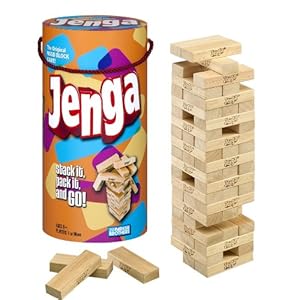
The only hiccup in the operation was W. W is a very reactive child, quick to anger and react, but also typically quick to recover. I'm not entirely sure what upset him, but W refused to participate in the latter half of the group session, but instead wandered the room, crawled under tables, and crumpled up papers to throw at the wall. Ms. B is fantastic because she got up at one point without me even noticing and brought him back to group, while I continued to run the game. Of course, as soon as he sat down, W began trying to kick the table, making the Jenga tower wobble in fear. As soon as W was ready to take his turn, the tower fell, which obviously set him off again.
When group ended, we took W for a walk to help him calm down. W told us he was upset that T cussed at him on the way up to class before group (which happened 30 minutes before so I'm not sure why it was being brought up now when he wasn't bothered by it at the time, but hey, I'm not an 11-year old emotionally disturbed child). We talked about what he could do "next time" and encouraged him to tell us and talk about what's bothering him, especially during group, so that we could talk about it and use it as a teachable moment. He went back into class with little trouble, and had no problems for the rest of the day.
So, all in all, a successful group session today! Of course, literally as soon as Ms. B and I left C's Crew, we had to manage a crisis as we passed by a student having a minor seizure outside the cafeteria. My job? Never boring.
Everyone in the C's Crew had a chance to remove a Jenga piece from the tower, and if they chose a "feeling" block, read the question aloud for everyone and answer it. Some of the questions in our set were things like, "How do you feel when you make a wise decision?", "Who is your role model and what do you admire about them?", "When you are in a tough situation, how do you deal with it?" and more. We had minimal issues during our first round. We needed to remind the boys to keep their elbows off the table (the tower was unstable after B got a little daring when removing blocks), to use appropriate voice level (they were understandably excited), and to wait their turn. They frequently tried to help whoever's turn it was by yelling out suggestions and pointing (and in the process shaking the table), which led to some frustration if someone didn't take a suggested piece out of the tower. Ms. B suggested they give "silent prompts" instead, and coached the boys in doing thumbs up or down to help guide their classmates towards "safe" Jenga decisions.

The only hiccup in the operation was W. W is a very reactive child, quick to anger and react, but also typically quick to recover. I'm not entirely sure what upset him, but W refused to participate in the latter half of the group session, but instead wandered the room, crawled under tables, and crumpled up papers to throw at the wall. Ms. B is fantastic because she got up at one point without me even noticing and brought him back to group, while I continued to run the game. Of course, as soon as he sat down, W began trying to kick the table, making the Jenga tower wobble in fear. As soon as W was ready to take his turn, the tower fell, which obviously set him off again.
When group ended, we took W for a walk to help him calm down. W told us he was upset that T cussed at him on the way up to class before group (which happened 30 minutes before so I'm not sure why it was being brought up now when he wasn't bothered by it at the time, but hey, I'm not an 11-year old emotionally disturbed child). We talked about what he could do "next time" and encouraged him to tell us and talk about what's bothering him, especially during group, so that we could talk about it and use it as a teachable moment. He went back into class with little trouble, and had no problems for the rest of the day.
So, all in all, a successful group session today! Of course, literally as soon as Ms. B and I left C's Crew, we had to manage a crisis as we passed by a student having a minor seizure outside the cafeteria. My job? Never boring.
Thursday, April 28, 2011
Team-Building: 11-Year Old Boys + Marshmallows = Sticky Awesome!
We had our first group session today with the class of 6:1+1 boys who have dubbed themselves "C's Crew" after their teacher (precious). Ms. B, my co-leader, began the group by having the students choose their group name and go over some ground rules. Then, we got down to our activity, something we'll be doing a lot of. The boys are very active, so we're planning less talking and teaching and more activities and hands-on learning. We're going to start with social skills and team-building activities, and move on to things that will be targeting anger management and effective conflict resolution.
Today, I ran our activity. I broke the students into two groups based on when their birthday in the year (we're going to do many groupings to make sure that everyone gets to work together) and filled the boys in on The Spaghetti Tower. To anyone who has done this ice-breaker, you know that it can go well or horribly awry. The purpose of the boys doing the activity today was to discuss, plan, and implement their collective ideas to make the tallest spaghetti/marshmallow tower they could. They had to work together as a team and consider their peers ideas in order to succeed. This is no easy feat for six 11-year old boys with impulsivity and less than stellar social skills.
The boys did well working together. B and T's team definitely had the upper-hand, as they are two of the higher functioning kids in the class socially, so they were able to bounce ideas back and forth and delegate tasks well. Their tower was the tallest. A was in their group, a boy who needs the most social skill work as he has symptoms of Asperger's Disorder. He was unable to contribute to the group tower without a lot of coaching and prompting from Mrs. C, their teacher. V and W's tower was the sturdiest, and also the stickiest! They worked with Ms. B on turn-taking, sharing, and clear communication. G was absent today, so we'll get him in the mix next week!
When the activity was done and the boys mouths were stuffed with marshmallow-y goodness, we did a bit of processing of the session. The boys talked about what made the activity work, and while Ms. B and I had to do some prying, we got "teamwork," "being nice," and "talking" out of them. We also gave our feedback and told the boys specific things we observed that helped the activity, and complimented them. We didn't get to chat as much as we would've liked since the dismissal announcements interrupted us, unfortunately. But all in all, a very enjoyable first session!
To the poor maintenance worker who had to clean the sticky and oozy mess left behind after 3:35pm... perhaps I can repay you with the leftover marshmallows?
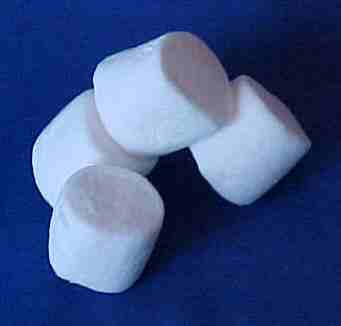
Today, I ran our activity. I broke the students into two groups based on when their birthday in the year (we're going to do many groupings to make sure that everyone gets to work together) and filled the boys in on The Spaghetti Tower. To anyone who has done this ice-breaker, you know that it can go well or horribly awry. The purpose of the boys doing the activity today was to discuss, plan, and implement their collective ideas to make the tallest spaghetti/marshmallow tower they could. They had to work together as a team and consider their peers ideas in order to succeed. This is no easy feat for six 11-year old boys with impulsivity and less than stellar social skills.
 |
| If only their towers were so neat. |
The boys did well working together. B and T's team definitely had the upper-hand, as they are two of the higher functioning kids in the class socially, so they were able to bounce ideas back and forth and delegate tasks well. Their tower was the tallest. A was in their group, a boy who needs the most social skill work as he has symptoms of Asperger's Disorder. He was unable to contribute to the group tower without a lot of coaching and prompting from Mrs. C, their teacher. V and W's tower was the sturdiest, and also the stickiest! They worked with Ms. B on turn-taking, sharing, and clear communication. G was absent today, so we'll get him in the mix next week!
When the activity was done and the boys mouths were stuffed with marshmallow-y goodness, we did a bit of processing of the session. The boys talked about what made the activity work, and while Ms. B and I had to do some prying, we got "teamwork," "being nice," and "talking" out of them. We also gave our feedback and told the boys specific things we observed that helped the activity, and complimented them. We didn't get to chat as much as we would've liked since the dismissal announcements interrupted us, unfortunately. But all in all, a very enjoyable first session!
To the poor maintenance worker who had to clean the sticky and oozy mess left behind after 3:35pm... perhaps I can repay you with the leftover marshmallows?
Shiny New Group Intervention!
I'm starting up a weekly group in my "favorite" 6:1+1 classroom with one of my colleagues, who is a counselor from an outside mental health agency. This is the class that that my buddies T and B are in, so I'm quite excited. We're going to be focusing on appropriate social skills to increase self-esteem and promote effective conflict resolution and anger management. We plan on collecting pre- and post-group information from their teacher, to see how well the students are using the skills taught in group within the classroom.
I thought it would be useful to outline the goals and activities in our sessions, in case other folks out in cyberland may want to replicate them in their own settings. It'll also be a good "processing" after the group, to collect my thoughts on how things went and what could be improved.

I thought it would be useful to outline the goals and activities in our sessions, in case other folks out in cyberland may want to replicate them in their own settings. It'll also be a good "processing" after the group, to collect my thoughts on how things went and what could be improved.
Take that and recap it back!
- Session 1: Team-Building: 11-Year Old Boys + Marshmallows = Sticky Awesome!
- Session 2: Feelings Jenga: An Excellent Opportunity For a Snit Fit
- Session 3: Self-Esteem: Spongebob, Cats, and Money, oh my!
- Session 4: "A" is for "Adorable," "N" is for "Neighborly," "S" is for "SA-WEEEET"
- Session 5: Anger Management: Indian Giver
- Session 6: When Outside Play Time Goes Awry
- Session 7: Peanut Butter, Jelly, and Dollop?!
- Session 8: Ice Cream Sandwich-y Goodbyes
Subscribe to:
Posts (Atom)