Monday, January 21, 2013

Kind Over Matter

Last weekend, I traversed to Albany, NY with other area psychologists for the NY Association of School Psychologists' (NYASP) executive board meeting. As I've mentioned before, I'm chapter co-representative for my area of New York, and I travel to Albany three times a year to brainstorm and converse about big issues in the field with other key state playmakers. It's a whirlwind two days of information overload that typically ends in a big dinner with lots of wine (my kind of party).

One of the board members participated in the 26 Acts of Kindness for Newtown, CT in her district and brought some resources to share. For those who are unaware, #26Acts was a challenge of sorts from NBC News' Ann Curry in the wake of the shooting, asking for people to spread kindness and goodwill towards others as a way of answering the question, "What can we do?" Here is an article from NBC, with photos and tweets of dozens and dozens of people who participated, and how they spread kindness.

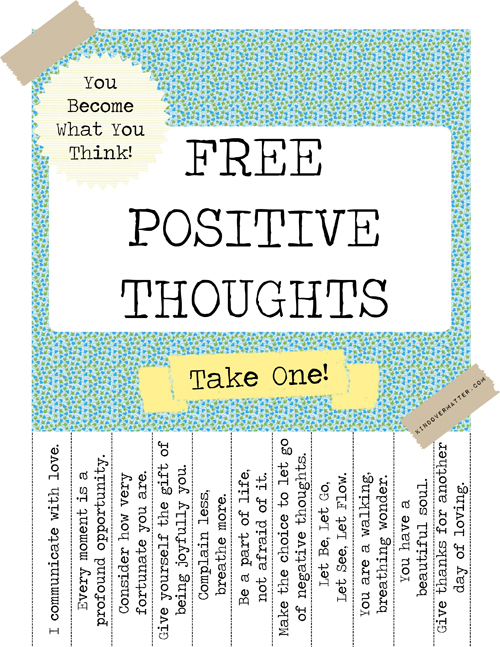
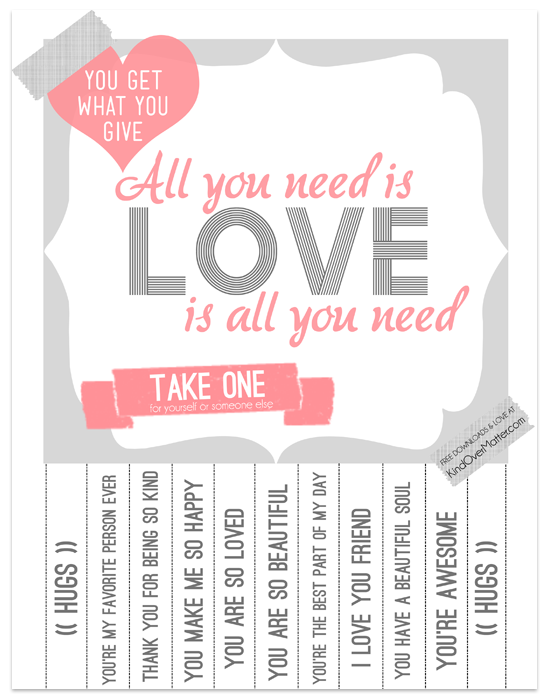
Our board member shared a printable from Kind Over Matter with tear-off positive thoughts and affirmations. I thought this was a great, simple idea to share at work as a way to "pass it on." I tacked my copy of the poster onto our main office bulletin board last Monday morning, and by the afternoon, two positive thoughts had already been torn off. Pass it on, folks.

Don't forget to check out and "Like" my Facebook page!

Thursday, January 10, 2013

"That Your Dad?"

Ever since I was an intern, I've had a photo of my dad and I sitting on my desk, sitting in between photos of Husband, file folders, colorful pencils, and other trinkets. First, it was a photo of Dad and I at my graduation from graduate school, then he and I at a minor league baseball game, then a Yankees game. Now, it's a photo of us at my wedding.

You may remember that my dad and I have a close relationship; I'm an only child and it was he and I for quite a while after my mom passed away when I was in high school. He's a great confidant and imparter of life wisdom, like how to perform basic maintenance on my car (pfft... I'm so not a handy person, but I can relate it to my job!). He's the best, we're lucky to have each other.

The photo of us on my desk has always drawn a lot of comments from kids. It's a great ice breaker/conversation starter, actually! When I was intern, a kiddo came over and asked me if he was my dad, and when I said "yes," she replied, "He looks nice" in the most kind, longing voice (adorbs). I got lots of conversations out of the Yankees photo because of Dad's Yankees hat and who doesn't know the Yanks (love 'em or hate 'em, their logo is like the golden arches). The Yankees photo always cracked me up because with his hat on, you couldn't see Dad's graying hair, so the kids always asked if he was my husband. He used to think that was hilarious, and probably complimentary, because he looks very youthful. Now, with the wedding photos, kiddos comment on how happy we look--true story, it was a great day! Yesterday, someone even told me that he looked familiar and wanted to know if he had been at school before.

Sometimes the kids' reactions to my dad's photo make me feel a little sad, too. The vast majority of my students come from homes with atypical families, meaning that they don't have a father or mother in their lives, they live in foster care or with another relative, etc. It's tough stuff. Many of them have good relationships with other mentors or parent-like figures, but there's something special about a relationship with a dad. So, Dad shall stay camped out on my desk, able to start conversations with kiddos about connections and good experiences they have to adults, looking on as a pseudo father-figure.

Don't forget to check out and "Like" my Facebook page!

Friday, January 4, 2013

Square Peg, Meet Round Hole

So we've all seen the cartoon at left, explaining why it's silly to force those of different abilities or skills into the same molds. I recently came across this very conundrum during a reevaluation for the Committee on Special Education (CSE) for a fourth grade student.

Z has been struggling for a long while, and is actually supposed to be in sixth grade but has been retained twice (almost three times, last year he was promoted mid-first quarter due to his age). Z has some severe language deficits that are really impacting his ability to read. He has extreme difficulty with decoding--confuses and substitutes sounds, reverses/transposes letters while reading and writing (i.e. will say "substitute" as "suditute" or "supitute"), doesn't retain learned sounds and sight words, etc. Z has been through the same, basic, 1st grade level reading program for two and a half years, and has made little lasting progress. He's practically memorized it, but can't translate it into classroom use in the subject areas, like science and social studies, and doesn't have the knowledge base and skills to move on to the next level. As the fourth grade curriculum becomes more challenging, he's stagnant. To say he's frustrated is an understatement.

So if everyone can learn to read using decoding and phonics, why can't Z? And why are we still instructing him using the same program he's already failed at twice? Because there isn't anything else available. In my building, we follow one to two district endorsed reading programs, all of which focus on phonics. Z is placed in an Integrated Co-Teaching classroom with two awesome teachers (he was in a model classroom last year, too), so he's received a great deal of individualized and small group instruction. His teachers have supported him in so many ways, and yet he still struggles. To say we're defeated is an understatement.

At his CSE meeting, we scratched our heads about what special education services we could provide for Z. Clearly, the Integrated Co-Teaching setting, despite his wonderful, attentive teachers, was not meeting all of his academic needs. We discussed placing him in a 15:1 Special Class, which in my district is for students with severe learning abilities who need more adult attention to achieve learning standards. We were hesitant, knowing that if he left our building for another placement, we couldn't guarantee that he would have a classroom with a high level of intervention, like he was getting from his two teachers (one would hope, but we can't assume). Unfortunately, we didn't have a good answer, a good place, or the right program to fit a kid like Z.

In the end, we did decide on a 15:1 Special Class, but it wasn't a comfortable one. His special education teacher in particular broke down in tears, knowing that despite providing a lot of support to Z, we didn't have what would be able to help him take off academically, especially with reading. It may be that the 15:1 won't either, but we're hoping that a very specific, detailed Individualized Education Plan (IEP) and a self-contained class will be able to provide him with more varied programs and curricula to draw from, so that he isn't sitting decoding CVC and CVVC words, like "cat" and "roar" for another year.

How do you support kiddos that don't fit the approved curricula and programs used in your schools, when there may not be the man power or budget for other options?

Don't forget to check out and "Like" my Facebook page!

Thursday, December 27, 2012

Best Musings of 2012

Well, it's that time of the year again... time for visits with family, relaxing and recharging over winter break, and eating so much that we dig for the baggiest dress pants/skirt come January 2nd. It's also time to revisit my best musings from the past year! 2012 was a big year for me, both personally and professionally--I got married, spent a killer week in the Dominican Republic, and became more involved within the field (1,000+ Facebook friends and being "published" can't be wrong). Here are the highlights from my bloggy year, as measured by most viewed, most comments, or my personal favorite:

January-- An uber mondo list of non-tangible reinforcement ideas, perfect for those kids you just really shouldn't be giving candy or sweet treats to... you know exactly who I mean. 

February-- A hard-edged, tough look at the challenges faced by professionals working in an urban education setting. This was written in response to a reader's question about commonly faced issues and necessary skill sets needed to work in urban education. Although it's not warm and fuzzy, this is one of my favorite posts because of how passionate I felt for my job when I was writing it. It's the heart of what I do. 

March-- A post about my school's monthly attendance breakfast, a school-wide incentive to increase overall attendance. Months later, I am a master pancake maker, worthy of song and world renown.

April--  An impressive collection of "Musings on Survival from School Psychologists," organized into categories. This post was compiled from entries to my giveaway of Dr. Rebecca Branstetter's book, "The School Psychologist's Survival Guide." This continues to be one of my most viewed posts, and with all the incredible advice and quips from readers and fans, how could it not be?

May-- My "a day in the life" series was a big hit, especially among grad students or new professionals in the field. I will definitely be continuing this... you know, when I have time during the day to make notes on my goings-on!

June-- An interesting case student on a preschooler I completed the transition reevaluation for to prepare him for kindergarten. He's a hearing child of two deaf parents who's native language was American Sign Language. Pair that with a lack of exposure to schooling and significant academic and language delays, and you've got one unique kiddo!

July-- A post where I reviewed my entire insane Committee on Special Education meeting list and assessment schedule from the year, and I realized two things--1) I accomplished an insane amount during the year and 2) It hadn't made me sprout gray hairs. I reiterate: I am psychologist. Hear me roar.

August-- no posts... I was too busy doing Zumba and wedding planning.

September-- My first day back to school for the 2012-2013 school year, where I was graciously gifted with a new nickname. It, thankfully, has gone by the wayside in the time since. 

October-- The compilation of the emotions/anger management small counseling group that I led in our first grade 6:1+1 Special Class, where we played with balloons, said adorable comments, learned "soup breathing," and tried not to make it 50 shades of cray.

November-- An informative post about families experiencing homelessness, and how the McKinney-Vento Act can provide services to them. 

December-- A large gathering of resources relating to grief, loss, crisis, and tragedy response that was posted in the aftermath of the Sandy Hook shootings in Newton, CT. Not a pleasant topic or event to remember, but the information continues to be relevant.

Don't forget to check out and "Like" my Facebook page!
Monday, December 17, 2012

Grief, Crisis, and Tragedy Resources

There are no words to explain or rationalize what happened at Sandy Hook Elementary on December 14th, 2012. It is truly a tragedy, and moving forward, we must focus on the impact that it may have on the students we work with. As school psychologists, we need to continue the job that our fallen Sandy Hook colleague, Mary Sherlach, lost her life doing: helping our students. 

Below is a list of resources to help students and families cope with crisis and tragedies, and the feelings and fears that may arise from such events. This is by no means exhaustive--PLEASE share further resources that have been helpful to you in your practice.

Tips for Teachers and Parents Following School and Community Violence (PowerPoint; NASP)
School Shootings: How to Empower Kids in the Face of Armed School Violence (KidPower)
15 Ways to Help Your Child Through Crisis (KidsPeace)
Talking With Kids About News: Age-by-Age Insight (PBS Parents)
Helping Kids Cope: When the Unthinkable Happens in Your Backyard (NYU Child Study Center)
Caring For Kids After a School Shooting (Child Mind Institute)
Tips for School Administrators for Reinforcing School Safety (NASP)
The 12 Core Concepts: Concepts for Understanding Traumatic Stress Responses in Children and Families (National Child Traumatic Stress Network)
Crisis or Trauma Reactions (NASP)
Talking With Children About Difficult Subjects: Illness, Death, Violence, and Disaster (NYU Child Study Center)
Talking to Children About Violence: Tips for Parents and Teachers (NASP)
A National Tragedy: Helping Children Cope (NASP)
Kids May Ask Questions About the Newtown Shooting. Be Frank and Reassuring, Psychologist Says (WFPL)
How to Help Children Cope with a Crisis (Save the Children)
How to Talk to Your Kids About the Conn. Shootings (NPR)
Helping Youth and Children Recover From Traumatic Events (multiple links; Readiness and Emergency Management for Schools)
Talking with Students in Response to the Sandy Hook Shootings (School Counseling by Heart)
Tragedy and Disaster Response Resources (multiple links; School Counselor Blog)

Don't forget to check out and "Like" my Facebook page!
Thursday, December 13, 2012

Awkward Conversations at School, Part 1

(because you know there will be more)

I love when I have experiences that are totally off the wall at work and give me gleeful bouts of laughter when I reflect on them. Yesterday, I got called down to have a conference with a student and the substitute principal, Mr. G. The student, who has never been a behavior problem and who I've never even seen before, was poking kids with a paper clip and pulled a chair out from under another student. Dangerous behaviors, and uncharacteristic, so we tried to figure out what was up. The student was tight-lipped, noncompliant, and full of crocodile tears, so it didn't go anywhere. The fun part came after the conference, when Mr. G said that he had a story to tell me. It went a little something like this (somewhat abbreviated for clarity and amusement):

Mr. G: "When I was the principal at XX Elementary, one of my kindergarten teachers brought a student into my office because the girl had punched the teacher in the stomach. I kept the girl in my office with me, talked to her, and sent her back to class after a half an hour. Not fifteen minutes later, the teacher was back because the girl had punched her again. Well, I knew this couldn't continue, so I had to suspend her. A kindergartener! When we were at the hearing for her suspension, I noticed she was acting strangely. Her eyes were looking up at the ceiling as she slouched and slid up and down in her chair. Now, I was a music teacher before I was a principal, and this girl was speaking in a voice that no child of her age and gender could naturally make. She kept groaning, 'I hate you, Miss Ray... I hate you, Miss Ray.' .... Now, I have to ask you... as a psychologist, do you believe in possession?"

Me: 0_o "Um."

Mr. G: "No, really. Do you believe in possession, do you have that faith? Because there's something wrong with that girl." [the one we had just conferenced with, who had thankfully left the room]

Ah... awkward, inappropriate conversations in the workplace. Needless to say, I booked it out of there before he started explaining any other uncomfortable and outlandish viewpoints that his music teacher expertise may have given him about behavior and mental health.

Don't forget to check out and "Like" my Facebook page!

Wednesday, November 28, 2012

Popcorn-y Goodbyes

Today was the last session of my first grade emotions/anger management group. Sad face... although without a doubt I haven't seen the last of those kiddos!

At the close of our previous session, the boys got to choose the treat that I would bring to our last group session, and the overwhelming choice was popcorn. Really? This was over cupcakes and ice cream sandwiches? Cool! (and since I was out sick this week and actually almost forgot, it's a good thing, since I had popcorn in the cabinet and didn't need to run to the store :) )

I brought Candy Land with me to play while we munched on our popcorn, and while fun and games it was, we were also learning! I'm sure I've said it 42 times, but I really enjoy playing simple board games with young kiddos to work on good sportsmanship, coping with losing, turn-taking, and other general social skills, plus counting/adding/subtracting, color recognition, etc for these little guys. With scaffolding and explicit modeling from me, it went really well. You can't help but feel silly saying, "G, it's now your turn, please pick your card. Everyone, what card did G draw? What color? How many? Let's count together, one purple, two purple. Great job, G please hand me your card. Okay, D, it's now your turn, please pick your card. Gentlemen, what card did D draw? ..." while playing Candy Land with four 6-7 year olds, but the continual, constant prompting and reminders really do help.

Hard to believe 8 weeks is over already! I'm going to buckle down and get some CSE work done before Christmas, with perhaps more group planning for the new year. Right now, my other colleagues are heading their own groups (4th and 5th grade girls groups focusing on bullying, 6th grade 6:1+1 group focusing on anger management and self-expression, and more!), so I'll take a breather and get my test on.

Don't forget to check out and "Like" my Facebook page!

Thursday, November 22, 2012

The Tale of Peter Rabbit

Our group lesson this week was a continuation of problem solving with a touch of "accepting consequences," and once again, I dipped into Skillstreaming for my outline and ideas. The lesson was almost torn asunder by the fact that our library didn't have the picture book I needed, but my social worker came through in the 7th hour like a trooper.

I read The Tale of Peter Rabbit to prime the lesson, which, side note, I had no idea was written over 100 years ago. The more you know. Also, I really need to use bibliotherapy more in my counseling endeavours. Anyway, the boys were a little squirmy (surprised?), but it's amazing how fast the wiggliest of kiddos calms when a story is being read to them. Peter Rabbit is a great story about what happens when we make poor decisions. Peter's mother tells him not to go in Mr. MacGregor's garden, but that rascally rabbit does it anyway, and gets the fright of his life as a consequence.

After we finished the story, I took the opportunity to practice some reading comprehension with the boys. We reviewed that story in sequence and also answered literal "wh" questions, to make sure they had a grasp on the details. We also discussed the choice that Peter made (going into Mr. MacGregor's garden), why it was a poor choice, and what the consequences were for his decision. We talked about the choices he could have made instead that would have been better (i.e. going only where his mom said, playing with his three siblings, staying home, etc) and what the consequences of those might have been. Not a lot of "text to self" connections, but in this isolated story, the boys were spot on!

This was out last "teaching" session of group. Next time, we'll have a little party, but of course I'll bring some skills into it as well. The plan is, amongst our popcorn chomping and cupcake licking, to play some board games to work on social skills, turn-taking, sharing, and good sportsmanship. Every opportunity is one to learn something!

Don't forget to check out and "Like" my Facebook page!