Showing posts with label resources. Show all posts

Saturday, September 21, 2013

IEP Writing Mini-Series!

I like to think I’m pretty good at writing Individualized Education Plans (IEPs). I pride myself on well-written work of all kinds (goes back to all those advanced English/composition classes, as well as a husband who studied journalism) and poorly written IEPs make me want to claw my eyes out. Seriously. My co-workers can attest that I pretty much Hulk-out over terrible IEPs because it means three things: 1) someone out there thought their product was acceptable and that makes me sad, 2) someone out there is lazy and/or doesn’t understand the process and could get in trouble with compliance, and 3) my team now has to clean up the mess.

“Poorly written” can mean a lot of things: unrealistic goals, a lack of quality information (or you know, any information at all), spelling/grammar errors or the wrong child’s name in the document (ugh!!), no quantifiable data, old/irrelevant information, overly negative… etc. IEPs are legally binding documents that are meant to be a holistic “snapshot” of a child’s current academic, social/emotional, and physical functioning, with appropriate accommodations and modifications to meet their needs, and goals to work on for the school year. That means they’re pretty stinkin’ important.

Since starting at my building four years ago, I’ve slowly taken over writing all initial and reevaluation IEPs from my Committee on Special Education (CSE) chairperson, who admits that it isn’t her strong suit. I definitely did not receive much/any training on IEP writing during graduate school, and have picked things up from supervisors/mentors, in-services, and reading exemplar IEPs. I’ve supported my special education teachers on how to write quality IEPs during annual review time through in-services and consultation. While I’m by no means an expert, I hope that small changes and education can lead to documents that are more in compliance, more representative of the student, and staff members who better understand the IEP writing process. As such, I’m going to start a mini-series here on the blog to tackle some of the “poorly written” IEP issues that come up most often! Keep in mind that I am no expert and am only sharing what I’ve learned along the way. Also remember that I’ll be discussing the way my district writes IEPs and that may not be representative of your district/area/state, but that general tips and tricks can translate into better documents anywhere.

Catch up on all the IEP writing mishaps and blunders here!


Don't forget to check out and "Like" my Facebook page!

Wednesday, August 21, 2013

You're a New School Psychologist! Now What?

Waaay back in June, Erika over at Finding the Thyme asked my Facebook page for ideas about "...where/how to get started when you enter a new school/1st job." I blame HGTV, Food Network, and The Murph-inator for the incredible delay in posting a blog entry with all the fantastic advice!

One big, huge theme was definitely on relationship building
  • "Bring yummy snacks for lounge with a card introducing yourself."
  • "...get to know the students, teachers and how the building works."
  • "Get to know [your] office and custodial staff. They truly run the school!"
  • "...make a point of introducing [yourself] or "checking in" individually with all the teachers/staff prior to the start of the new school year." 
  • "...don't forget to smile. For a lot of kids we work with, yours may the only smiling face they see."
  • "Immerse yourself into your new school community. Attend school and community sponsored events (open house, ice cream socials, PTA meetings, etc). Get to know your students, teachers, and parents. Most importantly, make sure they know who you are."
I think getting the lay of the land, figuring out whose office is where, and the general climate of a building is paramount, and also one of the most challenging things for a new professional. It took me a year to feel like I "belonged" to my current building when I was first hired. I was learning new software, new assessments, new procedures, and more, all of top of keeping in line with state timelines, managing the daily apocalypse, and of course, typing reports like a crazy woman. 

One of my cohort mates was telling me about a new psychologist hired at her preschool program who came in guns blazing, in-your-face, the ultimate resource and problem solver... and everyone hated her. She spent no time getting to know people or the system, did not consult with teachers regarding plans she was putting in place, and had an attitude that she was an all-knowing island. Not gonna fly. Remember that you can really accomplish nothing without the understanding and support of your staff, special education teachers, administration, and students. Spend time just chatting with people, learning their needs and expectations, asking questions, and listening! Introduce yourself at a faculty meeting or with a note in everyone's mailbox/email explaining who you are personally and professionally and what the school psychologist does to help the school ("What Is A School Psychologist?" from NASP might be good for this). Come March Madness, you're going to have a lot more support... and you'll need it. :)

People also toted the importance of organization and time management.
  • "...set up some times to meet with the special ed teachers you will be working with to get an idea of what triennials are due this year and what initials they may know are coming up... Find out what kiddos they may need your support with and review their files and observe."
  • "...you need to set up your office, get your resources in order, get at least a primer on your district's procedures. Get phone lists for each of your buildings, get all the passwords you need for student data systems etc., get your e-mail set up, request your business cards, set up your e-mail, and download all your testing software if that's not already done."
  • "Meet with your principal and ask what his/her expectations are for you, what would they really like to see done/ etc."
  • "...coordinate [your] schedule with the special ed teachers and related service providers...at each school to be sure there is some overlap so you all can be available for meetings...check-in with the admin asst at the main office to see where your space will be, if you are sharing a space with anyone else, file cabinet space, etc...Try and get a map of the school or at least a list of teachers/classrooms."

You'll need a bigger Post-It.
They hit the nail on the head--you can't do your job without the essential resources. I know from my experience after getting hired that it took me over a month to have my business cards, log-ins, email account, and laptop straightened away. Without a solid organizational and resource base, you'll be scrambling. It would seem that it comes back to relationship building: it can help you figure out the right people to get important items like a schedule, phone list, etc from, will let you consult with your new staffy friends on cases and upcoming meetings, and will allow you to meet with students to get to know them and their needs.

To all of you who have just embarked upon a new position and/or new school year, or who are about to do so, good luck! I have two weeks left of summer... so I'll be over here on the couch, sitting in my sweat pants covered in puppy hair, watching Pioneer Woman. :)

PS: Check out this stellar compilation of "Musings on Survival from School Psychologists." It has a wealth of great advice from school psychologists like you! Also, consider purchasing Dr. Rebecca Branstetter's The School Psychologist's Survival Guide, because it's rather awesome.

Don't forget to check out and "Like" my Facebook page!

Tuesday, March 5, 2013

The Low Down on Manifestation Determination Reviews (MDRs)

One of the more challenging meetings for any school psychologist is the manifestation determination review. Manifestation determination reviews (MDRs) occur when a student with a disability has been suspended for 10 or more days, with the purpose of examining if the suspendable behavior had a direct and substantial relationship to the child's disability and/or if the behavior was a direct result of the school not implementing the student's Individualized Education Plan (IEP). I won't get into the legal guidelines and specifications of the MDR process, but highly recommend you understand the expectations of your state. For any New Yorkers out there, check out Part 201: Procedural Safeguards for Students with Disabilities Regarding Discipline.

When facing an MDR, remember your most important client: the student. You will have advocates, parents, teachers, administrations, and more all with things to say about the suspension, but MDR is all about making sure that the kiddo is not being punished for a behavior that is part of their disability or because their IEP wasn't implemented. Remember, IEPs are legally binding documents, and if they are not followed properly, you can have a lot of trouble on your hands. It is unfair to suspend a student for something they may not be able to help, and thus, we have MDR to protect them. It's serious, but it's important and a good thing, because it allows us to look out for a kiddo who might not be able to advocate for himself and to investigate a change in services if what is on the IEP is not sufficient.

As a psychologist who may be leading an MDR meeting, there's lots to do to prepare. You want all the information possible, even if it seems like too much! An extremely well-informed decision is the safest and most appropriate when we're talking about a kiddo's education. Some things to consider:

  • Talk to everyone who witnessed or was involved in the incident that resulted in the suspension. Find out the facts, the chain of events, if this is a pattern of behavior, and more!
  • Make sure you know the suspended student's IEP like the back of your hand... why and how the student meets criteria for a certain disability, every accommodation and modification, typical behaviors and levels of functioning for the student, etc. 
  • In the same vein, interview the teacher either before the meeting or during and have them explain specifically how they're meeting each accommodation related to the behavior in question, such as special seating arrangements, refocusing & redirection, behavior modification, etc.
  • Does the kid have any diagnoses outside of their special education classification (i.e. a student with a Learning Disability also being diagnosed with ADHD)? You need to consider those, too, when making a decision, so re-read any diagnostic criteria.
  • Review the Functional Behavior Assessment/Behavior Intervention Plan (FBA/BIP) and talk to the teacher to see exactly how it's being implemented and the progress being made on it. Get data and specific information. 
  • Find out if the student was in the appropriate program from their IEP when the behavior occurred. If not, the IEP may not have been implemented with fidelity. (i.e. if the IEP says a 6:1+1 for all academic and special areas, was that being followed, or was there no aide/a mixed group with general ed students/etc?)
The outcomes of MDR aren't always easy, especially when it means canceling a suspension because a student's behavior is related to their disability or the IEP wasn't implemented properly. At some point along the way (if you haven't already), you will have an angry teacher or administrator who doesn't want the student back in school because of the severity of their behavior. I can say myself that I had a teacher virtually run out of an MDR meeting down to the main office to scream at the principal that I was sending her kiddo back to school. But remember: your client is the child and your job is making sure that their educational needs are being met and they aren't being punished unfairly. 

Feel free to leave your comments and thoughts on MDR, particularly tips and tricks that have helped you! Go forth and MDR, you Super Psychologists! 

Don't forget to check out and "Like" my Facebook page!

Sunday, February 3, 2013

Retention on Repeat

A seventh grade student mistaken for a parent by a staff member. A 13-year-old in fourth grade. A first grader a two heads taller and more developed than all her classmates. An eighth grade student able to drive to school. Sound nonplausible? I have them all in my school.

Retention is an epidemic in my building and district. The district has pass/fail guidelines, and if a student does not meet them, chances are they will be retained and repeat the grade. Give them an extra year to make up what they didn't learn the first time through, and they're on their way. Since I recently found out that my school is in the lowest 5% of schools in the entire state, and our graduation rate hovers around 50% district-wide, my Spidey senses tell me there's a hole in that logic.

We could go on and on about the research regarding retention, but in short: retention doesn't work. Kids that are retained can lose their achievement gains from repeating within 2-3 years, are more likely to be unemployed, on public assistance, or in jail as an adult, may have negative social/emotional adjustment, are more likely to have negative social outcomes as adults (drug use, low self-esteem, emotional distress), and are 5-11x more likely to drop out of school or not achieve a diploma by age 20. In an urban setting with many of these problems already present in the community, retention is just one more strike against getting students prepared for a productive life in a post-school world.

Are there instances where retention is a good option? Sure, but educators must look at it on a kid-by-kid basis and consider the whole child (academics, social/emotional development, maturity, physical development, etc)--not use blanket guidelines or benchmarks.

Since we can't change the system, we need to work at a building and classroom level. What are some other options for educators, aside from retention? NASP has some great ideas in this excellent article. A sampling of some that would work within an urban education framework, for the short attention-spanned :) :
  • "Early developmental programs and preschool programs to enhance language and social skills. Implementing prevention and early intervention programs is more promising than waiting for learning difficulties to accumulate.
  • Early reading programs: developmentally appropriate, intensive, direct instruction strategies have been effective in promoting the reading skills of low-performing students. 
  • Systematic assessment strategies, including continuous progress monitoring and formative evaluation, to enable ongoing modification of instructional efforts.
  • Student support teams with appropriate professionals to assess and identify specific learning or behavior problems, design interventions to address those problems, and evaluate the efficacy of those interventions.
  • Extended year, extended day, and summer school programs that focus on facilitating the development of academic skills.
  • Tutoring and mentoring programs with peers, crossage, or adult tutors focusing on promoting specific academic or social skills."
Here are two other article resources from NASP:

How does retention look in your building? Does your district have academic benchmarks for students to meet in order to be promoted to the next grade? What do you do instead of retaining/repeating students?

Don't forget to check out and "Like" my Facebook page!

Monday, January 21, 2013

Kind Over Matter

Last weekend, I traversed to Albany, NY with other area psychologists for the NY Association of School Psychologists' (NYASP) executive board meeting. As I've mentioned before, I'm chapter co-representative for my area of New York, and I travel to Albany three times a year to brainstorm and converse about big issues in the field with other key state playmakers. It's a whirlwind two days of information overload that typically ends in a big dinner with lots of wine (my kind of party).

One of the board members participated in the 26 Acts of Kindness for Newtown, CT in her district and brought some resources to share. For those who are unaware, #26Acts was a challenge of sorts from NBC News' Ann Curry in the wake of the shooting, asking for people to spread kindness and goodwill towards others as a way of answering the question, "What can we do?" Here is an article from NBC, with photos and tweets of dozens and dozens of people who participated, and how they spread kindness.

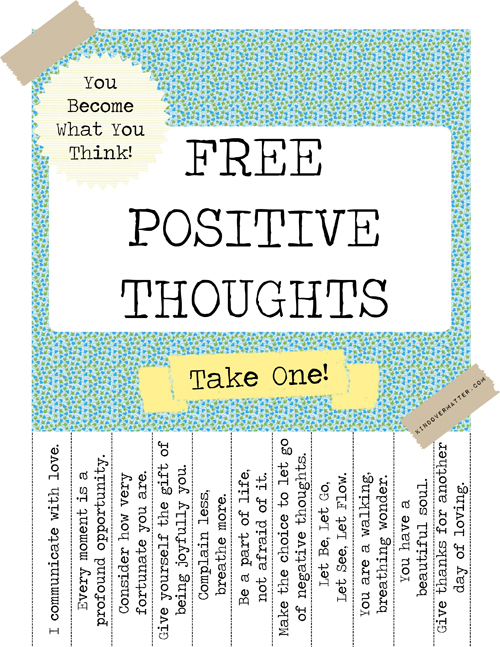
Our board member shared a printable from Kind Over Matter with tear-off positive thoughts and affirmations. I thought this was a great, simple idea to share at work as a way to "pass it on." I tacked my copy of the poster onto our main office bulletin board last Monday morning, and by the afternoon, two positive thoughts had already been torn off. Pass it on, folks.

Don't forget to check out and "Like" my Facebook page!

Thursday, December 27, 2012

Best Musings of 2012

Well, it's that time of the year again... time for visits with family, relaxing and recharging over winter break, and eating so much that we dig for the baggiest dress pants/skirt come January 2nd. It's also time to revisit my best musings from the past year! 2012 was a big year for me, both personally and professionally--I got married, spent a killer week in the Dominican Republic, and became more involved within the field (1,000+ Facebook friends and being "published" can't be wrong). Here are the highlights from my bloggy year, as measured by most viewed, most comments, or my personal favorite:

January-- An uber mondo list of non-tangible reinforcement ideas, perfect for those kids you just really shouldn't be giving candy or sweet treats to... you know exactly who I mean. 

February-- A hard-edged, tough look at the challenges faced by professionals working in an urban education setting. This was written in response to a reader's question about commonly faced issues and necessary skill sets needed to work in urban education. Although it's not warm and fuzzy, this is one of my favorite posts because of how passionate I felt for my job when I was writing it. It's the heart of what I do. 

March-- A post about my school's monthly attendance breakfast, a school-wide incentive to increase overall attendance. Months later, I am a master pancake maker, worthy of song and world renown.

April--  An impressive collection of "Musings on Survival from School Psychologists," organized into categories. This post was compiled from entries to my giveaway of Dr. Rebecca Branstetter's book, "The School Psychologist's Survival Guide." This continues to be one of my most viewed posts, and with all the incredible advice and quips from readers and fans, how could it not be?

May-- My "a day in the life" series was a big hit, especially among grad students or new professionals in the field. I will definitely be continuing this... you know, when I have time during the day to make notes on my goings-on!

June-- An interesting case student on a preschooler I completed the transition reevaluation for to prepare him for kindergarten. He's a hearing child of two deaf parents who's native language was American Sign Language. Pair that with a lack of exposure to schooling and significant academic and language delays, and you've got one unique kiddo!

July-- A post where I reviewed my entire insane Committee on Special Education meeting list and assessment schedule from the year, and I realized two things--1) I accomplished an insane amount during the year and 2) It hadn't made me sprout gray hairs. I reiterate: I am psychologist. Hear me roar.

August-- no posts... I was too busy doing Zumba and wedding planning.

September-- My first day back to school for the 2012-2013 school year, where I was graciously gifted with a new nickname. It, thankfully, has gone by the wayside in the time since. 

October-- The compilation of the emotions/anger management small counseling group that I led in our first grade 6:1+1 Special Class, where we played with balloons, said adorable comments, learned "soup breathing," and tried not to make it 50 shades of cray.

November-- An informative post about families experiencing homelessness, and how the McKinney-Vento Act can provide services to them. 

December-- A large gathering of resources relating to grief, loss, crisis, and tragedy response that was posted in the aftermath of the Sandy Hook shootings in Newton, CT. Not a pleasant topic or event to remember, but the information continues to be relevant.

Don't forget to check out and "Like" my Facebook page!

Monday, December 17, 2012

Grief, Crisis, and Tragedy Resources

There are no words to explain or rationalize what happened at Sandy Hook Elementary on December 14th, 2012. It is truly a tragedy, and moving forward, we must focus on the impact that it may have on the students we work with. As school psychologists, we need to continue the job that our fallen Sandy Hook colleague, Mary Sherlach, lost her life doing: helping our students. 

Below is a list of resources to help students and families cope with crisis and tragedies, and the feelings and fears that may arise from such events. This is by no means exhaustive--PLEASE share further resources that have been helpful to you in your practice.

Tips for Teachers and Parents Following School and Community Violence (PowerPoint; NASP)
School Shootings: How to Empower Kids in the Face of Armed School Violence (KidPower)
15 Ways to Help Your Child Through Crisis (KidsPeace)
Talking With Kids About News: Age-by-Age Insight (PBS Parents)
Helping Kids Cope: When the Unthinkable Happens in Your Backyard (NYU Child Study Center)
Caring For Kids After a School Shooting (Child Mind Institute)
Tips for School Administrators for Reinforcing School Safety (NASP)
The 12 Core Concepts: Concepts for Understanding Traumatic Stress Responses in Children and Families (National Child Traumatic Stress Network)
Crisis or Trauma Reactions (NASP)
Talking With Children About Difficult Subjects: Illness, Death, Violence, and Disaster (NYU Child Study Center)
Talking to Children About Violence: Tips for Parents and Teachers (NASP)
A National Tragedy: Helping Children Cope (NASP)
Kids May Ask Questions About the Newtown Shooting. Be Frank and Reassuring, Psychologist Says (WFPL)
How to Help Children Cope with a Crisis (Save the Children)
How to Talk to Your Kids About the Conn. Shootings (NPR)
Helping Youth and Children Recover From Traumatic Events (multiple links; Readiness and Emergency Management for Schools)
Talking with Students in Response to the Sandy Hook Shootings (School Counseling by Heart)
Tragedy and Disaster Response Resources (multiple links; School Counselor Blog)

Don't forget to check out and "Like" my Facebook page!

Wednesday, November 28, 2012

Popcorn-y Goodbyes

Today was the last session of my first grade emotions/anger management group. Sad face... although without a doubt I haven't seen the last of those kiddos!

At the close of our previous session, the boys got to choose the treat that I would bring to our last group session, and the overwhelming choice was popcorn. Really? This was over cupcakes and ice cream sandwiches? Cool! (and since I was out sick this week and actually almost forgot, it's a good thing, since I had popcorn in the cabinet and didn't need to run to the store :) )

I brought Candy Land with me to play while we munched on our popcorn, and while fun and games it was, we were also learning! I'm sure I've said it 42 times, but I really enjoy playing simple board games with young kiddos to work on good sportsmanship, coping with losing, turn-taking, and other general social skills, plus counting/adding/subtracting, color recognition, etc for these little guys. With scaffolding and explicit modeling from me, it went really well. You can't help but feel silly saying, "G, it's now your turn, please pick your card. Everyone, what card did G draw? What color? How many? Let's count together, one purple, two purple. Great job, G please hand me your card. Okay, D, it's now your turn, please pick your card. Gentlemen, what card did D draw? ..." while playing Candy Land with four 6-7 year olds, but the continual, constant prompting and reminders really do help.

Hard to believe 8 weeks is over already! I'm going to buckle down and get some CSE work done before Christmas, with perhaps more group planning for the new year. Right now, my other colleagues are heading their own groups (4th and 5th grade girls groups focusing on bullying, 6th grade 6:1+1 group focusing on anger management and self-expression, and more!), so I'll take a breather and get my test on.

Don't forget to check out and "Like" my Facebook page!

Thursday, November 22, 2012

The Tale of Peter Rabbit

Our group lesson this week was a continuation of problem solving with a touch of "accepting consequences," and once again, I dipped into Skillstreaming for my outline and ideas. The lesson was almost torn asunder by the fact that our library didn't have the picture book I needed, but my social worker came through in the 7th hour like a trooper.

I read The Tale of Peter Rabbit to prime the lesson, which, side note, I had no idea was written over 100 years ago. The more you know. Also, I really need to use bibliotherapy more in my counseling endeavours. Anyway, the boys were a little squirmy (surprised?), but it's amazing how fast the wiggliest of kiddos calms when a story is being read to them. Peter Rabbit is a great story about what happens when we make poor decisions. Peter's mother tells him not to go in Mr. MacGregor's garden, but that rascally rabbit does it anyway, and gets the fright of his life as a consequence.

After we finished the story, I took the opportunity to practice some reading comprehension with the boys. We reviewed that story in sequence and also answered literal "wh" questions, to make sure they had a grasp on the details. We also discussed the choice that Peter made (going into Mr. MacGregor's garden), why it was a poor choice, and what the consequences were for his decision. We talked about the choices he could have made instead that would have been better (i.e. going only where his mom said, playing with his three siblings, staying home, etc) and what the consequences of those might have been. Not a lot of "text to self" connections, but in this isolated story, the boys were spot on!

This was out last "teaching" session of group. Next time, we'll have a little party, but of course I'll bring some skills into it as well. The plan is, amongst our popcorn chomping and cupcake licking, to play some board games to work on social skills, turn-taking, sharing, and good sportsmanship. Every opportunity is one to learn something!

Don't forget to check out and "Like" my Facebook page!

Sunday, November 18, 2012

Homeless, but not Helpless

Regardless of the kind of area you work in, homelessness is probably a bigger problem than you think. In urban settings, it's even more pronounced. I recently attended a training on the McKinney-Vento Homeless Assistance Act and the services available to families experiencing homelessness, and it was so informative and helpful. It was one of those trainings where I could use the information immediately the next day-- and did.

The biggest misconception about homeless is that the family is living on the streets, but it's actually living without a permanent home (specifically, a fixed, regular, and adequate nighttime residence). "Homelessness," per the McKinney-Vento Act, can look like one of the following:
  • Sharing housing.
  • Living in a motel, hotel, trailer with wheels, or campground.
  • Emergency or transitional shelters.
  • Awaiting a foster care placement.
  • Cars, parks, public spaces, abandoned buildings, standard housing, bus or train stations.
  • A nighttime residence not ordinarily used as a regular sleeping accommodation (i.e. park bench).
The biggest qualifier I see in my school is families sharing housing. It's actually astounding the amount of my kiddos who would qualify for McKinney-Vento now that I know this is considered a form of homelessness, because they do not have their own permanent residence. We also see a lot of families living in hotels.

How do you know if a family might be homeless? Watch the students closely. Are they wearing the same clothes every day, or don't have clothing appropriate to the weather conditions? Do they hoard food, ask for seconds, etc? Do they have working telephone numbers? Are they evasive about their living situation when asked? 

The McKinney-Vento removes the barriers impeding homeless children from attending school. It ensures homeless children transportation to and from school free of charge, allowing them to attend their school of origin (the last school they were enrolled at or the school they attended at their last permanent residence), regardless of what district the family resides in. It also requires schools to register homeless children immediately, even if they lack normally required documents, such as immunization records or proof of residence. Even after finding permanent housing, a family can access McKinney-Vento services for a year afterwards.

One thing that concerned me was how little I knew about the McKinney-Vento act. As an educator, I didn't know about a vital act that ensures proper education for disadvantaged students? And if I didn't know much about these resources, what about the parents?

Just a few days after the training, we were notified of a family who had experienced a house fire and has been living in a hotel for the past two months. The five kiddos in the family were wearing the same clothes every day, didn't have coats (good ol' Western NY weather is unkind), and always seemed hungry. Mom came into school looking for support, and we were able to provide her with quite a lot immediately. We gave the students extra uniform pants and shirts and also enrolled them in our school's Backpack Program, which provides a backpack of nonperishable food from the local food bank to students for the weekend. I also notified our district's McKinney-Vento liaison, who will contact mom for further support.


As school psychologists, we may seem to be primarily responsible for the appropriate education of special education students. However, we need to be mindful of the resources and tools that will lead to the proper instruction of ALL students. Investigate the McKinney-Vento act, find out who your district's liaison is, and refer families. You never know who might be in need. 

Here is the full text of the McKinney-Vento Homeless Asisstance Act, for those ambitious folks out there.

Don't forget to check out and "Like" my Facebook page!

Wednesday, November 7, 2012

Putting the Group Pieces Together

Today's 1st grade group counseling session was very productive! I grabbed Mr. S, another colleague, to come up and assist, as I had role-plays planned and knew that one of me and four of them wouldn't be productive. Our lesson today was putting together the skills we've been learning, so that we can look towards problem-solving (that'll come next time).

We reviewed and reinforced ad nauseum how to identify a feeling and practiced showing with our bodies what different emotions looked like. We mostly focus on "anger" in this group, because that's what these little kiddos with Emotional Disturbances are most troubled by, but we also were able to work on "sad" and "excited," too. After we reviewed the emotional side of things, we reviewed all the different ways to relax when upset, and practiced a few all together, like deep breathing and counting backwards.

After we finished our review, Mr. S and I each took two kiddos to break up and work through scenarios from the Skillstreaming in Early Childhood manual, Skill #28. We gave each boy a scenario or two and had them go through the steps we've been learning:

  • Identify the feeling
  • Notice how the body feels
  • Relax and calm down
  • Stop
  • (next we'll add "Think" and "Problem Solve")

While they acted out the steps, Mr. S and I helped their partner identified each one. For instance, as each kiddo was modeling how their body felt, the partner pointed out different things the body was doing that meant they were angry or sad (i.e. growling, clenched hands, arms crossed, stomping feet, red face). Then as a trio, we would pick a calming down strategy and practice it together. J came up with a great strategy all on his own--singing the alphabet slowly. I praised him up and down for that good idea, and of course, we all sang it together (his teacher was also impressed, because the class is missing a lot of foundational skills needed for first grade, like letter recognition and sound-symbol correspondence). After we practiced in pairs, we came back to the large group and had J and D, the more put together kiddos of the day, model for everyone. 

The biggest challenge with these kiddos is getting them to sit after our activity or lesson to process. Even with Mr. S's help, the boys had a lot of trouble sitting back down on the rug and listening for a few minutes of talking about what we did today and what we learned. They were under tables, standing by bulletin boards, rolling/laying on the floor, etc. The processing at the end of a lesson is important to me to sum things up and set up the next lesson, but I feel like I leave group lately with things hanging unfinished. On the upside, this was a worthwhile lesson, and it seems like at least the kiddos are remembering what we talk about in group--even if they can't always practice it!

  Don't forget to check out and "Like" my Facebook page!

Sunday, November 4, 2012

Progressive Muscle Relaxation? Relax THIS, Lady!

My fourth first grade emotions/anger management group session was marred by the insanity that is November 1st. On this fateful day, the kiddos came to school all tweaked out on candy from Halloween the night before, ready to cause armageddon and other gleeful shenanigans. Enter 50 Shades of Cray.

Group was scheduled for 2:30pm, a nice way to end up the school day before dismissal starts at 3:10. Around 1:00pm, Miss R came down in a tizzy because one of the boys was throwing an Uber Tantrum and she needed help. Mr. S, my mental health counselor colleague, and I strapped on our sneakers and took off (and by sneakers, I mean high heels. Please, you know I didn't have no sneakers on :) ). There we found N, red-faced, scream-crying, face down on the floor, spitting, swimming like Ryan Lochte, only the hands and feet were for punching/kicking/scratching, not winning gold medals. He was not responding to Miss R, the classroom aide, or either of us, and the other students had been removed by the speech therapist, because N had partially destroyed the room.

Mr. S and I held N's hands and feet gently to keep him from hurting himself or one of us, and tried to calm him down, but N was having none of it. Mr. S was getting scratched on his wrists, I was getting kicked (by feet with no shoes or socks... I smelled like sweaty little boy feet for the rest of the day), and it was unproductive. It was one of those situations where you felt totally helpless, because nothing was working to help the kiddo. Mr. S recommended I call the district's crisis team, because this was more than just a tantrum. In the end, the crisis team recommended I call our school resource officer, who came quickly to assist Mr. S, and N's mom eventually came to take him home. We were pooped.

By the time 2:30 rolled around for group, I was worried that N's behavior had set the other 3 boys off and it wasn't going to be a productive session. I was told that it was fine to come up, so I settled myself on the rug with D, G, and J and we got down to business on the topic of "relaxation" (irony). Immediately, I knew that it was going to be a wash--they were much squirmier than normal, D and J kept posturing like they were going to punch each other, and where they normally respond to positive redirection and praising, it wasn't working. What an awesome day to try and do relaxation techniques!

J had to be removed to take a "cool down" walk, so with D and G we were able to discuss why it's important to calm down when you're upset, and ways to do so. With some teeth-pulling, we were able to get a good list (watch TV, sit by yourself, put your head down, go for a walk, deep breathing, counting backwards, etc). We also practiced some of the techniques where appropriate, like the deep breathing technique I call "Soup Breathing." Students visualize a bowl of their favorite soup in front of them, which is too hot to eat. They're excited to eat it, so they take a big sniff of how good it smells ("in through the nose"), then blow on it to cool it down ("out through the mouth").

I settled the boys into their tables and crossed my mental fingers that the progressive muscle relaxation activity I planned would be somewhat productive. It took a while to settle the boys down, but we were able to get through a few of the scripts with little trouble. J joined us halfway through and was able to participate appropriately. I used the script found here, with some minor modifications to the introduction and conclusion to shorten them. I also didn't do all the scripts, only "hands and arms," "arms and shoulders," "jaw," and "legs and feet." I liked the script because of the visualization, and while the kids got a little silly, they did exactly as instructed.

Once the muscle relaxation was over and I tried to process and get them talking about the activity, the squirminess was back. D and J were right back at each other, instigating a fight and getting in each other's faces. D went to hide under a table and J yelled and tried to push a chair at him. I went to try and calm J down, but for some reason, he had forgotten all the cool techniques he had just learned! With time and help from Miss R, the boys got settled back into their dismissal routine and I was able to skeddadle. Phew.

Don't forget to check out and "Like" my Facebook page!

Wednesday, October 24, 2012

This is How My Body Feels When I'm ANGRY

Third group session today in my emotions/anger management first grade group! Last time, we focused on identifying feelings in others, and today, I wanted to focus on how the kiddos can tell what they're feeling in themselves. Since this group is mainly focusing on anger management, we talked about how we can tell we're angry based on what our body does or feels.


We practiced making "angry bodies" and while the kids flexed like The Hulk and pulled faces that rival Chris Farley's in the "Colombian Coffee Crystals" SNL sketch (above, I couldn't resist), I pointed out different things their bodies were doing. D's eyes got small and narrowed, J's face got red, N's fists balled up. We also talked about what happens inside our bodies when we get angry too, like heads pounding, stomachs getting in knots or butterflies, and hearts beating quickly.

My modified worksheet for today.
Once we got the basics down (and the boys calmed themselves down again, because they got pretty riled up), I sent the boys back to their tables to complete a coloring worksheet our of Colorful Counseling! Life Lessons Learned Through Drawing. I don't own this, but somewhere along the way I received copies of the anger management unit, which I recommend. Most of it is too advanced for these little guys, but this worksheet was good. I modified it a little bit to make the writing portion more simplified, and gave the boys bigger spaces to write in. While they drew their pictures, I circled around and commented on various aspects, and wrote in highlighter their answers to the questions below, so they could trace.

Each boy had really neat parts of their drawing, it was awesome to see their uniqueness. D's was done all in red, because he said red was a "mean color." N's had balled up fists and a big blue stomach, because he said that his tummy feels funny when he's been crying. J's drawing also had balled up fists and a big "yelling mouth." Most of the boys also drew a happy picture on the back. When they were finished drawing, we went back to the carpet to present our pictures. Each boy had a turn to be the presenter, where he described his picture and read each of the lines at the bottom. It gave us a good opportunity to talk about good listening behaviors and how to be a good presenter, as an added bonus!

Next week... relaxation and calming down, in which I will attempt to do a relaxation script with my squirmy friends. Wish me oodles of luck.

Don't forget to check out and "Like" my Facebook page!

Wednesday, October 10, 2012

We Feel... AWESOME!

Today for our group, I grabbed the wonderful Skillstreaming in Early Childhood book and taught Skill 21: Knowing Your Feelings. This was a great little lesson to practice identifying feelings in a variety of settings and talking about the situations in which we feel certain emotions.

We started by reading Feelings, by Aliki, which is a wonderful book and covers a ton of different feelings. The boys had a hard time getting past "mad, sad, happy," so the book gave us the chance to talk about "nervous, shy, excited" etc. We went page by page, reading each little snippet, pointing out characters and talking about what they're feeling and why. We also discussed times that they felt the same emotion.

After we finished examining the book (and they wanted to go through EVERY character), I had pictures printed off of people and animals showing different emotions. We went through each picture and I had the kiddos make up a little story about why each person or animal was feeling that way, and tell about a time that they felt that way too. It also gave us the opportunity to talk about different synonyms for each feeling (mad: angry, upset, frustrated, etc). Lots of repetition and praising, to the point that their teacher must've thought that we were accomplishing nothing!
My favorite animal photo from group today.

This was a good group today, the boys were on-task with minimal fidgeting. I find that it works really well with such a small group of students to just call them out individually if they're not raising their hands. If they are, then they get chosen and get verbal reinforcement ("D, I love how you raised your hand, thank you"). Next time, we're going to talk about how our body feels when we feel certain emotions, and how we can tell by looking at other people.


Don't forget to check out and "Like" my Facebook page!

Tuesday, October 2, 2012

All About Emotions and Social Skills!

At one of our last bi-weekly meetings, my principal asked that my colleagues and I plan to do counseling groups in our 6:1+1 Special Classes to teach appropriate social skills that the kiddos may be lacking. I immediately jumped all over the idea, because it meant I could do a group in my new squish G's classroom! He's a "squish" because I want to hug and squish him... obvi.

As with the 5th grade social skills/anger management group that I ran a few years ago in a 6:1+1 classroom, I will outline and recap my lessons on this post as they are completed. And here we goooo!

Don't forget to check out and "Like" my Facebook page!

Friday, May 11, 2012

Putting People First

One of our district special education supervisors recently forwarded some information to the Committee on Special Education staff on People First Language, asking that we share it with our special education teachers. Seriously? Let's share that with EVERYONE! General education, special education, teacher aides, teacher assistants, engineering staff, cafeteria monitors, secretaries, parent volunteers... EVERYONE works with students with disabilities, and EVERYONE should be thoughtful of how they are reacting to those with differing abilities.

It's a simple concept really--putting a person before their disability--but the implications are great. By using People First Language, we are describing what the person has, and not who the person is. Kathie Snow at Disability is Natural has great resources regarding People First Language. This PDF gives a great overview of People First Language, and was the one that I shared with my entire building. This PDF is a great supplement as it provides examples of how we can turn phrases into People First Language.

Are you mindful of using People First Language?

Don't forget to check out and "Like" my Facebook page!

Tuesday, April 17, 2012

The One with All the Great Advice From You!

With my giveaway for "The School Psychologist's Survival Guide" concluded, I want to thank everyone who posted fantastic, thoughtful, and meaningful advice that they would include in their own survival guide for the profession. I was so pleased and overwhelmed with the response! You're all rather marvelous, you know that?
Without further ado, I bring you: 
"Musings on Survival from School Psychologists"


Musings on Positive Relationships with Children


...When questioning whether or not you can make a difference in a child's life, remember that at the very least, you can always provide the child with a positive experience with a mental health professional. That way, they will be more likely to seek help again in the future. School psychologists can "plant that seed". - AmberNicole

Make sure your office has both tissues and food at all times. Sweet and simple. - Jill Snyder 


My advice would be to never underestimate the power of modeling respect to students. I model how to be respectful to my kids and it has led to many important conversations. - Amanda Myers 

We get caught up in focusing what is "wrong" with the child, or how to "fix" them that many times the team forgets that everyone, and I do mean EVERYONE, has strengths. I find if you start with the strengths, you indicate to parents those positive aspects - then you can return to those strengths when you get to the recs to demonstrate how those skills can be used to compensate for whatever weaknesses were found. I have found in working with older kiddos that sometimes adults have never spoken to them about those strengths and have only focused on the difficulties. To see their faces light up when I tell them that they are smart and do great work - that is what keeps me coming back to work each day. :) - Tonya Gscheidle 


Sometimes, you may be the only person who cares about "that kid". Do not let them down. Show them that they can trust adults by believing in them no matter what. - Colleen Allen

You may be the only advocate a child has... - Susan Hatcher

I think the most important thing I have learned this year is to follow through on promises made. Either giving parents information or meeting with student, demonstrating to others that they can rely on you is important to building relationships. – Becky

Do not let administrators or others with control issues, mental health concerns or just plain bad energy zap your own. Too much time in schools is wasted focusing on "bad" staff members rather than on the children. Eventually, they will move on or improve. You have no control over how they act and behave, even if it's hurtful to others. All you can do is conduct yourself with respect and focus on the students. They are what matters. Humor helps, too! - Colleen Allen

Always remember confidentiality. You may have a group of girlfriends at a school you work at, but it doesn't mean it gives them special permission to hear about confidential issues. Vent to your pet! :) - Ashley Marie 

Bring and show love in all that you do! We all have strengths--find ways to help others showcase theirs. - Colleen Allen

Musings on Taking Care of YOU

...Don't forget to sanitize your WISC blocks so you dont get the funk that all the kids have :) - Heather Klingensmith Hill

A great piece of advice I received and want to share is to keep a "Favorites File," a file of thank you notes, pictures, and drawings that have made me happy at work. They are great therapy. - Beverly Whalen-Schmeller 

You can't help others until you've first helped yourself. Self-care is just as important as everything else. - Colleen Allen

My supervisor always told me that I needed to take care of myself so I could take care of others. So important to set boundaries and practice self-care. Going to spend spring break starting Monday relaxing and having some fun so I can come back refreshed and energetic! Seems like there is always more that I could do, but if I do too much I won't be any good for anyone. So it's not being selfish or failing to leave the work at school and go home at the end of the day! – Jen

Hang in there. Summer's coming! Just kidding, I love my job. But the time off is a nice perk. Lol - Kim Nichol Rich 


There will always be more work to be done, more kids to be tested, more reports to write, more staff to assist, etc., etc., etc. There are deadlines that must be met, but once you have met those, remember there will always be more to do tomorrow. Go home. :-) Take care of yourself. Take care of your family. Without doing those things, you don't stand a chance of helping your schools. - Amy Cannava 

Keep work at work, and when you are home be there completely. Sometimes it is healthy to walk away from the laptop! - Julie Dwyer 

What may seem like one incredibly stressful day, week, month or year will pass. You may not see the forest through the trees until you have a higher view. Remember to enjoy calmer days so you can stock up for rocky ones. - Colleen Allen

Remember that although frustration and anger may be directed toward you it is not personal. - Sharin Palladino Green 


Humor, humor, humor...using it at work to get through tough situations is key. So much of what we do can be mentally and emotionally taxing. Finding the humor in these situations or just being able to laugh when things get rough is what helps me survive. So, find some fellow psychs to yuk things up with, watch lots of Seinfeld, read the Onion, or plaster your office with Far Side cartoons - whatever works to keep you smiling. If you're smiling, others will too. - Kim Tungate 

My advice after 32 years as a school psychologist is "Tomorrow will be a better day!" - Marcia Krell Dimetrosky 

Remember that although you may want to be superman, you can't do everything in one day. Your "to do" list will always be there, so be mindful of the things about your job that make it worthwhile. - Denise Butterfield 


Musings on Being Type-A

My key to survival is two-fold. First, an organization system that would make the OCD population swoon keeps me on top of every eval, counseling case, and "to do" item in my crazy world. Second, I don't take it home on the weekends. And when I do, I end up negotiating with myself to get it done during the week anyway. Almost impossible, but if there's a will to find time during the week then there is a way. You will make your deadlines... – Erika

When scheduling evals, be flexible...always have more than one back-up plan ;) - Ronda Norman 


Bring you calendar to every meeting. It seems that there is always another meeting that needs to be scheduled or changed and this will save you having to go back to your office and begin the email tag game. - Sirenna Brown Palici 

...one thing that I have learned to be most important is organization and time management. If you are not organized and can't manage your time then you're in big trouble when it comes to this job! - Kari Na 

...you have to be organized, have excellent time management, practice good self-care, because you can't help others if you're not helping yourself, and you need to find balance between your work life and your non-work life! - Samantha Bailey 

Be organized. Sounds simple but can make or break you. Being organized with your time by setting daily and weekly goals for yourself will make a huge difference in your productivity and may lessen the amount you have to take home. -  Tiffany Miller Powell

...I've learned to be flexible and that there are many ways to address the same problem..I've also learned the usefulness of a planner and organization skills! - LaShante Smith


Musings on Meaningful Relationships with Parents and Families

I have learned how to break bad news/evaluation data to parents. After a couple of years, of talking with parents, I have learned that a majority of them are nervous of what I may have to say to them about evaluation data. They are afraid I am going to tell them their child is incapable of learning or not average. I try to give evaluation data with a mix of funny things their child may have done while working with them, and an outline of their strengths and weaknesses. - Kim K.

It sounds super corny, but the most important piece of advice I can think of is to remember when you are writing a report about a child, you are talking about somebody's BABY. - Eliane Hack 


I quickly learned that this field is about making relationships and making people feel comfortable. The more approachable and down to earth I appear to parents the better I can communicate during a meeting. It's very important to make the effort to meet with parents before hand and talks to them about their fears and worries. That initial meeting always seems to open doors when delivering not so positive news. It always makes me feel happy when I've met a parent before a meeting and they walk into a room full of school staff, they look around the table and look directly at the people they are already familiar with. There's a sense of comfort and relief I appreciate. I always try and put myself in their shoes and validate their concerns. – pmendez1

Well, there are many! I'd have to say that forming a relationship with parents is perhaps one of the most helpful things I can do. – Andrea


When talking with parents, always remember that for them, this is new. Even if they've had other children go through special education, or you're meeting for a triennial, it's still new for them even if I have done it 1000 times. It's important to take the time, build the relationship, and always put myself in the parent's place before ever opening my mouth. – Pam

I've found it very helpful to establish a good rapport with parents. It's important to make them feel comfortable, reassuring them that you will answer their questions and concerns. This will be very beneficial during the assessment process. Conflict can be avoided when parents feel their child is important to the psych. - Norma Diaz 


…parent communication is probably the biggest thing I've learned. The more you can relate to the parent, the more comfortable they will feel. Meeting with parents before meetings is so helpful, and seems to put them more at ease, especially with initial referrals. – bt

The best advice that I learned was to focus on services when sharing news with families. The news can be hard for families to hear for the first time, so you have to be understanding and gentle. But getting everyone on the same page when talking about how to service the student goes a very long way to help put the family (and yourself) at ease. – Rob

My advice would be to put yourself in the parent's shoes and pretend you have to hear this information about your child and present in a tactful and respectful way. - Ashleigh Edwards 


Musings on Personal vs. Professional Lives

The best advice I've ever received was: don't let this job take over your life. While it can be very rewarding, this line of work can quickly become overwhelming. There is so much to do & never enough time to get everything done. If you aren't careful, you can get burned out. This is a hard thing for me to remember sometimes but over the years I've gotten better. :-) – Jenskaroo

For me the most important thing has been to learn how to balance work and personal life. We are much more effective when we take care of ourselves and not let our stress level get too high. Our job is never ending so don't ever expect to be "done". Learn to ask for help when you need it. A decade later and I still need to ask for help :) - Estella Castro 


Musings on Advocating for our Profession

There are so many things that come to mind, but I think the most important is make sure others know what it is that we do!! We do so many things on a day-to-day basis, beyond testing and attending meetings, and it is important that students, families, and school staff know what are training is and what we are able to provide to a school. I know that marketing ourselves might not seem to be an important job responsibility, but in these budgetary times... it is our MOST IMPORTANT TASK :) – Angie

When I went through training so many years ago....many many years ago or at least sometimes it seems that way, a professor told us not to take ownership of problems that weren't ours to own. That has been really good advice for times like when you have told another school professional for the umteempth time not to order the power hungry child because that just starts the power fight and yet on it goes. It just helps to be very clear about what you as a school psychologist can control and what you can't and just always give a situation your best. - Nancy Gregg 

Musings on Active Listening

Sometimes, you may be the only person your staff can turn to for personal support. Most of us have not been trained in adult therapy. Listen anyway. You can seek guidance if needed on referring out later on. - Colleen Allen

I have learned to take seriously my responsibility as a listener. In many cases students, staff and parents are seeking my advice but also have a genuine concern which needs to be expressed and heard. Additionally, we are all a team, including parents and need to work together to help students reach their maximum potential. You cannot change a student, but you can change an environment. I'm also a newbie and navigating the system is a challenge but I know I don't have to do it alone. - Sara Star 

My supervisor always reminds me to ask as many questions as possible and to remember that the teachers are human too! When they complain about a child it's not because they are bad people, it's because they are looking for someone to help them. Teachers really do care about their students despite what society tells us! -Dorice Moise  

… The most important and helpful key to survival for me is that I have learned to be an active listener. Instead of always contributing to the conversation, I have found that if we just let parents/teachers talk out their problems and concerns without interruptions, they can usually work out issues on their own. Sometimes, all our parents and teachers really want is someone to talk to to, someone to understand them, and someone there to provide support when they need it. Just showing that you genuinely care about what others have to say and understanding their perspective can make a world of difference when it comes to building quality relationships. – Dana Sharp


Musings on Relationships with Game Changers

My advice for a survival guide would be to remember that relationships with classified staff (secretaries, custodial staff, transportation, etc.) are just as important as relationships with certified staff. In some cases it is even more important because these staff members often literally hold the keys to the doors you need opened. - Kyle Carlin (the giveaway winner!!)

Relationships are key to creating systemic change. You can have all the policies, paperwork, and procedures in place and people won't change unless you first show trust and value in them as members of an important team. - Colleen Allen

...One of the biggest things that I learnt in my first year is the value of being within a TEAM!! Ask question after question to those in the field around you as we never stop LEARNING! Remember we are psychs but we work heavily with social workers, speech pathologists, Occupational therapists, paediatricians etc as they each have their own perspective on how they deal with a case so it is imperative we utilize our teams and other professionals to bring other perspectives in order to assist the child as best as possible!! :) - Sarah Maree 

Approach each child and adult with an open mind and an open heart. We are good about doing this for most children, but not always for the adults with whom we work. Some principals are having bad days. Some parents just lost their job. Other parents are so overwhelmed with their child's behavioral needs that they take it out on you. Then they apologize. I always thank them, because at least they are engaged enough to care. - Colleen Allen

I would say make positive relationships with everyone from parents, teachers, principals, secretaries, even janitors (they usually have the important keys!!) and also don't make assumptions about anyone or anything because there is usually a lot more to the situation, story, or circumstances you had no idea about in the first place! Oh and take time out to laugh... because if you get too caught up in the other stuff you might forget to smile from time to time. - Laura Pahls 

Find allies. It can be tough doing a job where you are usually the only one in the building. Find people who have your same vision and passion for children. They will fill your cup when it is getting low. - Colleen Allen


Musings on Interventions, Meetings, Testing, and Data

Every once in a while, as annoyed as you may be at the time (namely March-June when spring becomes a disabling condition), it IS helpful to test a kid who is NOT eligible. We tend to work mostly with low achieving or struggling kids (and in some locales, gifted) but we don't want to lose sight of what normal is. Everyone has something they're not good at. Everyone has strengths and weaknesses. Everyone has room for improvement. But that doesn't mean everyone is disabled. - Amy Cannava 

Avoid jargon and psycho-babble! I get really excited when I see a parent or teacher "take notes" while I'm presenting testing results because it means the information I'm giving them is helpful. - Kelly Backues 


Celebrate small victories. Change for adults and students does not happen overnight. I have seen the power of believing in positive growth. Those 9th grade boys labeled as "the number one behavior problem" in the school learn to change, even a little, by 10th grade. The teacher with poor classroom management generally learns some new approaches with the support of colleagues. Find at least one positive change made each day by your "toughest" student (or teacher). - Colleen Allen

Most of the time decisions are made harmoniously or a compromise is reached. Sometimes the answer is "no" - and I have learned to not take another's unpleasant reaction personally. - Cathy Gayda Tomes 

The relationship of the various subtest scores will reveal relative strengths. Explain to the parents, teachers and student how the student can use that particular (or those particular) strengths to improve performance in the area of greatest difficulty. Be creative! When creativity runs dry...look back through your PRIM manual to spark an idea. - Laura Kelley Gleichauf 

The one piece of advice that has helped me the most is "Let it go." I tend to ruminate on tough meetings, advocates' remarks, and other stressful aspects of the job. Learning to let go of the tougher aspects of the job have helped me to enjoy my job even more. – Megan C.

You'll always do better if you stop and think before you react to the "fires" people seek your assistance with. A calm well thought out reaction helps more than anything! Also, emphasize the positive!! - Jennifer Braden Kirkpatrick 

Musings on Making a Difference

Change does not occur overnight. Coming into a school district and creating effective change for students is a daunting task. When you are starting to feel like you are getting stuck, take a moment to reflect where things started. You will be surprised to realize how much has been accomplished-it just is a slow and gradual process! - Leigh Ann Weaver 

Persist - don't give up on the child, the teacher, the parent, the school or yourself. You can take things further, it might take years to make headway, the progress may not be what you expect... and then will take 2 steps back, but keep going. Come back and do it again, do it another way; persist. - Twin Beans 

Our work never ends and that can be overwhelming. My practicum supervisor once told me that we can never change the world in a day, but what is important is to spend every day trying to inspire those around us. This has definitely helped me to survive :) - Angela Mann 


Musings on Always Learning

Ask other colleagues when you are in doubt or need reassurance. Gather as much information as you can and then use common sense!! - Leigh Singleton Parmer 


…the one piece of advice that I have received and now share is to give yourself (new school psychologist) time and room to learn and grow. I've spent the first nine months of my job watching and listening, all the while I was treading water. ...I am already making plans of what I am going to do next year and how I am going to manage it. We often feel that after the many years of learning, training and preparation, we should drop into our new jobs and be able to function smoothly. Or at least I did. I've since learned this is not the case - it takes time to develop your own groove. For maybe the ONLY time in my working career, I am impatient for summer to come and go, because I am eager to start the new school year with all the great things that I've learned being on my own this year. – Mo

Steal! There are many, many gifted educators and clinicians in our field - don't reinvent the wheel but personalize the things others have created (always give credit, of course) and pass it on! - Amy Fortney Parks 

I'm still pretty new to the profession, but even if I wasn't, I have learned there will always be much more to learn, experience, and do. At first this was just overwhelming and at times made me feel incompetent even if I wasn't in others' views. I now try to look at it as Alzheimer's innoculation, constant opportunity to grow, never being bored, and a sign that I'm on the right track. I've also learned that I have to be willing to give others and myself a break-no one can be perfect and that should not be our goal… - Stephanie Strouse 

Something I've been learning for myself is just as we don’t expect our kiddos to get it perfect on their first try or every time we can have that same wiggle room for ourselves. Can't expect every behavior plan, intervention, meeting, etc to go on without a hitch. This has been especially important for my grad school learning curve and will help me in years to come :) - Erika Laura 

You absolutely cannot have all the answers. It's ok to say, "I'm not sure, let me look into that.” ...Melissa Roudis Potter 

Be confident. Finding the right balance of confidence (not arrogance) is crucial, especially in your first year. In order to be seen as a source of reliable information you need to approach situations confidently with both staff and parents. Of course this confidence should not be entered into blindly. If you don't know the answer to something, find someone who does. Always being prepared fosters the best type of confidence. - Tiffany Miller Powell

...the more a new professional/student learns about the profession and our best practices, the easier some of the large, seemingly daunting tasks will become. Right before starting internship and really getting out there to work, it can really feel overwhelming. It's common to feel unprepared, even if the graduate program you attended is well staffed and highly sought after. It's important for newbies to remember that the longer you work in the field, and develop your craft, the more refined and polished your professional skills will become. -Marcella Wright  

Don't forget to check out and "Like" my Facebook page!