My fourth first grade emotions/anger management group session was marred by the insanity that is November 1st. On this fateful day, the kiddos came to school all tweaked out on candy from Halloween the night before, ready to cause armageddon and other gleeful shenanigans. Enter 50 Shades of Cray.
Group was scheduled for 2:30pm, a nice way to end up the school day before dismissal starts at 3:10. Around 1:00pm, Miss R came down in a tizzy because one of the boys was throwing an Uber Tantrum and she needed help. Mr. S, my mental health counselor colleague, and I strapped on our sneakers and took off (and by sneakers, I mean high heels. Please, you know I didn't have no sneakers on :) ). There we found N, red-faced, scream-crying, face down on the floor, spitting, swimming like Ryan Lochte, only the hands and feet were for punching/kicking/scratching, not winning gold medals. He was not responding to Miss R, the classroom aide, or either of us, and the other students had been removed by the speech therapist, because N had partially destroyed the room.
Mr. S and I held N's hands and feet gently to keep him from hurting himself or one of us, and tried to calm him down, but N was having none of it. Mr. S was getting scratched on his wrists, I was getting kicked (by feet with no shoes or socks... I smelled like sweaty little boy feet for the rest of the day), and it was unproductive. It was one of those situations where you felt totally helpless, because nothing was working to help the kiddo. Mr. S recommended I call the district's crisis team, because this was more than just a tantrum. In the end, the crisis team recommended I call our school resource officer, who came quickly to assist Mr. S, and N's mom eventually came to take him home. We were pooped.
By the time 2:30 rolled around for group, I was worried that N's behavior had set the other 3 boys off and it wasn't going to be a productive session. I was told that it was fine to come up, so I settled myself on the rug with D, G, and J and we got down to business on the topic of "relaxation" (irony). Immediately, I knew that it was going to be a wash--they were much squirmier than normal, D and J kept posturing like they were going to punch each other, and where they normally respond to positive redirection and praising, it wasn't working. What an awesome day to try and do relaxation techniques!
J had to be removed to take a "cool down" walk, so with D and G we were able to discuss why it's important to calm down when you're upset, and ways to do so. With some teeth-pulling, we were able to get a good list (watch TV, sit by yourself, put your head down, go for a walk, deep breathing, counting backwards, etc). We also practiced some of the techniques where appropriate, like the deep breathing technique I call "Soup Breathing." Students visualize a bowl of their favorite soup in front of them, which is too hot to eat. They're excited to eat it, so they take a big sniff of how good it smells ("in through the nose"), then blow on it to cool it down ("out through the mouth").
I settled the boys into their tables and crossed my mental fingers that the progressive muscle relaxation activity I planned would be somewhat productive. It took a while to settle the boys down, but we were able to get through a few of the scripts with little trouble. J joined us halfway through and was able to participate appropriately. I used the script found here, with some minor modifications to the introduction and conclusion to shorten them. I also didn't do all the scripts, only "hands and arms," "arms and shoulders," "jaw," and "legs and feet." I liked the script because of the visualization, and while the kids got a little silly, they did exactly as instructed.
Once the muscle relaxation was over and I tried to process and get them talking about the activity, the squirminess was back. D and J were right back at each other, instigating a fight and getting in each other's faces. D went to hide under a table and J yelled and tried to push a chair at him. I went to try and calm J down, but for some reason, he had forgotten all the cool techniques he had just learned! With time and help from Miss R, the boys got settled back into their dismissal routine and I was able to skeddadle. Phew.
Don't forget to check out and "Like" my Facebook page!
The trials, tips, tales, and triumphs of a new professional in education.
Showing posts with label interventions. Show all posts
Sunday, November 4, 2012
Wednesday, October 10, 2012
We Feel... AWESOME!
Today for our group, I grabbed the wonderful Skillstreaming in Early Childhood book and taught Skill 21: Knowing Your Feelings. This was a great little lesson to practice identifying feelings in a variety of settings and talking about the situations in which we feel certain emotions.
We started by reading Feelings, by Aliki, which is a wonderful book and covers a ton of different feelings. The boys had a hard time getting past "mad, sad, happy," so the book gave us the chance to talk about "nervous, shy, excited" etc. We went page by page, reading each little snippet, pointing out characters and talking about what they're feeling and why. We also discussed times that they felt the same emotion.
After we finished examining the book (and they wanted to go through EVERY character), I had pictures printed off of people and animals showing different emotions. We went through each picture and I had the kiddos make up a little story about why each person or animal was feeling that way, and tell about a time that they felt that way too. It also gave us the opportunity to talk about different synonyms for each feeling (mad: angry, upset, frustrated, etc). Lots of repetition and praising, to the point that their teacher must've thought that we were accomplishing nothing!
This was a good group today, the boys were on-task with minimal fidgeting. I find that it works really well with such a small group of students to just call them out individually if they're not raising their hands. If they are, then they get chosen and get verbal reinforcement ("D, I love how you raised your hand, thank you"). Next time, we're going to talk about how our body feels when we feel certain emotions, and how we can tell by looking at other people.
Don't forget to check out and "Like" my Facebook page!
We started by reading Feelings, by Aliki, which is a wonderful book and covers a ton of different feelings. The boys had a hard time getting past "mad, sad, happy," so the book gave us the chance to talk about "nervous, shy, excited" etc. We went page by page, reading each little snippet, pointing out characters and talking about what they're feeling and why. We also discussed times that they felt the same emotion.
After we finished examining the book (and they wanted to go through EVERY character), I had pictures printed off of people and animals showing different emotions. We went through each picture and I had the kiddos make up a little story about why each person or animal was feeling that way, and tell about a time that they felt that way too. It also gave us the opportunity to talk about different synonyms for each feeling (mad: angry, upset, frustrated, etc). Lots of repetition and praising, to the point that their teacher must've thought that we were accomplishing nothing!
![]() |
| My favorite animal photo from group today. |
This was a good group today, the boys were on-task with minimal fidgeting. I find that it works really well with such a small group of students to just call them out individually if they're not raising their hands. If they are, then they get chosen and get verbal reinforcement ("D, I love how you raised your hand, thank you"). Next time, we're going to talk about how our body feels when we feel certain emotions, and how we can tell by looking at other people.
Don't forget to check out and "Like" my Facebook page!
Wednesday, October 3, 2012
Hot Potato, Hot Potato!
Today was the kick-off of my newest counseling group, hooray!! For this group, I'm going to be focusing on identifying feelings and the way the body feels when we have certain emotions, and ways that we can cope and problem-solve when we get upset. These boys have a lot of anger management issues, and when they get upset, they resort to screaming, crying, hiding under tables, hitting, and throwing things. It's especially hard for the little ones with significant emotional problems to express themselves properly, so that's what we're going to work on.
Today's group was just an introduction, laying of ground rules, and team building. I started the group by talking about what behaviors are safe and unsafe for us to use in group and reviewed the classroom rules. The kiddos were super rambunctious because they had just come back from speech. After some calming and reinforcing of the little things they were doing correctly ("I like how G's voice is on 0," "J, thank you for sitting criss-cross," "N is showing me ready behavior because his hands are in his lap," etc), we got on track and the boys chose their group name to be The Footballs.
The activity we did today was all about communication and working together. I blew up a balloon and the boys stood in a circle. The objective was to keep the balloon in the air. We brainstormed ways to hit the balloon (with our hands, knees, heads, elbows, etc) and how we have to hit it (gently, up, not across the room, not at another person). Each took their spot on the carpet and up the balloon went. As we went through the first very exciteable round, I got to point out a lot of skills:
In retrospect, this game was probably a little above the kiddos level, but we made the best of it. Once we were done, I got the kiddos calmed down (a rather big task after jumping all over whacking a balloon around), and we processed a bit. We talked about what was easy, what was hard, and what we learned about working together and talking it out. They pooped out and lost attention pretty quickly, so processing was kept at a minimum.
Don't forget to check out and "Like" my Facebook page!
Today's group was just an introduction, laying of ground rules, and team building. I started the group by talking about what behaviors are safe and unsafe for us to use in group and reviewed the classroom rules. The kiddos were super rambunctious because they had just come back from speech. After some calming and reinforcing of the little things they were doing correctly ("I like how G's voice is on 0," "J, thank you for sitting criss-cross," "N is showing me ready behavior because his hands are in his lap," etc), we got on track and the boys chose their group name to be The Footballs.
The activity we did today was all about communication and working together. I blew up a balloon and the boys stood in a circle. The objective was to keep the balloon in the air. We brainstormed ways to hit the balloon (with our hands, knees, heads, elbows, etc) and how we have to hit it (gently, up, not across the room, not at another person). Each took their spot on the carpet and up the balloon went. As we went through the first very exciteable round, I got to point out a lot of skills:
- Assertiveness - making sure they "called" the balloon by saying "I got it" if they planned on hitting it. It kept them all from running into each other and gave each boy ownership over that hit.
- Turn-taking - one of the boys, J, got a little too riled up and kept hogging the balloon. I had the opportunity to redirect him to include the other boys, and had him sit out when he needed a break from the excitement to give the others a chance.
- Apologizing - as expected, a few bumps occurred. We practiced saying a good apology when this happened (i.e. looking at the person in the eye, saying you're sorry, and why) and also accepting the apology with a "thank you, it's okay."
In retrospect, this game was probably a little above the kiddos level, but we made the best of it. Once we were done, I got the kiddos calmed down (a rather big task after jumping all over whacking a balloon around), and we processed a bit. We talked about what was easy, what was hard, and what we learned about working together and talking it out. They pooped out and lost attention pretty quickly, so processing was kept at a minimum.
Don't forget to check out and "Like" my Facebook page!
Tuesday, October 2, 2012
All About Emotions and Social Skills!
At one of our last bi-weekly meetings, my principal asked that my colleagues and I plan to do counseling groups in our 6:1+1 Special Classes to teach appropriate social skills that the kiddos may be lacking. I immediately jumped all over the idea, because it meant I could do a group in my new squish G's classroom! He's a "squish" because I want to hug and squish him... obvi.
As with the 5th grade social skills/anger management group that I ran a few years ago in a 6:1+1 classroom, I will outline and recap my lessons on this post as they are completed. And here we goooo!
- Session 1: Hot Potato, Hot Potato!
- Session 2: We Feel... AWESOME!
- Session 3: This is How My Body Feels When I'm ANGRY
- Session 4: Progressive Muscle Relaxation? Relax THIS, Lady!
- Session 5: Putting the Group Pieces Together
- Session 6: A Day Without Accomplishing a Thing in Group is a Day Wasted
- Session 7: The Tale of Peter Rabbit
- Session 8: Popcorn-y Goodbyes
Friday, January 13, 2012
A Check-up for Check-in, Check-out
(how difficult was that title to mentally read?)
We are approaching the half-way mark of the school year, which is insane to think about. Where the heck did it go?!
Here is a rather delayed update on Check-in, Check-out (CICO), our Tier II Positive Behavior Intervention Support (PBIS) initiative. We currently have 63 students involved in CICO, but 5-8 will be leaving the intervention by the end of January, due to moving to another setting (smaller classroom out of our building or an alternative school). Honestly, I haven't been as diligent with data entry as I should have been. With the state review and an intense Committee on Special Education (CSE) caseload lately, it hasn't been on the forefront of my mind. But, it's been steadily plugging along in the background, with some great and not-so-great things to report:
The Not-So-Great Observations:
1. CICO is hard to implement with fidelity when one of the mentors decides to stop seeing kiddos, but doesn't tell you for two weeks. It is equally as difficult to maintain when the second mentor assigned to that caseload leaves her position and doesn't return to your building. We ended up fixing this when two interns with our community mental health providers came on full-time, as we had two more mentors available, but for two months 10 kids were not receiving CICO because of a lack of volunteers. Recommendation: choose people to be CICO mentors who WANT to participate, not who are assigned to or who are apt to change their minds. Make sure they are people who understand the power of consistent, positive behavior interventions, and who are invested in making change.
2. Your administration needs to be fully on board with PBIS and behavioral interventions in general. Recommendation: make sure they understand the positive effects that PBIS can have on the culture and climate of a school building, stress the need for consistency and continuity, get them involved in the positive aspect of PBIS, rather than promoting punitive consequences (i.e. suspension), and emphasis patience, as change does not happen over night. Having the support of the administration is vital to any effective, well-run program.
3. Kids are not always honest. At the beginning of the observation, some eager students were filling out their own sheets, rating their behavior as "great" when it may not always have been. Recommendation: having adults initial each part of the Daily Report Card that they complete, to show that it wasn't done by little hands.
4. Middle school kids are less than responsible when it comes to getting their Daily Report Cards filled out. I have MANY days of incomplete data because our 7th & 8th graders forget to have their sheets filled out, lose their sheets, or choose not to participate in CICO. Still working on a good fix for this issue--suggestions welcome. Recommendation: we have removed some kiddos from CICO and put them on other Tier II interventions because of their lack of responding (carrying around a sheet about your behavior isn't the most thrilling idea for some kids). Also, add an extra incentive that will entice kids to participate--see below.
The Great Observations:
1. CICO produces real change, if you give it time and provide kiddos with positive reinforcement for a job well done. Sometimes the only thing that kids need to have a productive, on-track day is a good interaction with an adult. We have been able to "graduate" some kids off of CICO due to progress, which has been sustained after the intervention ended.
2. Lines of communication have been expanded. Staff members are talking about behavior in concrete terms and are referring children they think would benefit from CICO. They're better able to describe behaviors, as they can pinpoint areas of difficulty during the day and make changes accordingly (i.e. if Ahmed receives low scores in '"being responsible" because he forgets to complete homework, his CICO mentor can spend more time at the end of the day helping him prepare to take the right materials home. Or, if Sue receives low scores in "being safe" in math, which is after lunch, her teacher can give her a reminder about appropriate classroom behaviors vs. what's acceptable in the lunch room as she transitions).
3. In a similar vein, collaboration between colleagues has increased. We're able to secure services and/or other interventions quickly by sitting down with the data, talking to providers, and seeing which kids need something more, like a small group, individual counseling, or a Functional Behavior Assessment/Behavior Intervention Plan (FBA/BIP). When kids are showing steady improvement behaviorally, staff have let me know that we can try phasing CICO off. We've talked about a bigger reward when kids who typically have a tough time have a stellar day, and bounce ideas off each other about what might work for kids who need a little modification to their CICO plan (i.e. like the one kid who kept losing his Daily Report Card sheet, so we laminated one that can be re-written on, and stapled it inside his agenda).
4. Kids are getting rewards for good behavior. This may seem like a no brainer, but many people have difficulty understanding that what is fair is not always equal and what is equal is not always fair. Kids receiving Tier II interventions need the extra incentive towards shaping good behavior; they don't automatically do what they're "supposed to" and need guidance to do what is expected. Personally as a CICO mentor, I give every child who meets their daily point goal a Tiger Ticket, which goes into a pot for daily prize drawings within the classroom and monthly prize drawings for big items (amusement park tickets, zoo tickets, Lasertron passes). If a kiddo meets their goal for 4 of 5 days in a week, I buy them the candy bar of their choosing. The middle school CICO mentor throws a pizza party for all students who meets a certain amount of points within that month. You just need to find out what works for your staff and students.
Are you doing Check-in, Check-out in your building? What observations and recommendations do you have to help the intervention run smoothly? I hope to continue refining the program for the rest of the year and into next year, so suggestions are ALWAYS welcome!
Don't forget to check out and "Like" my Facebook page!
Monday, January 2, 2012
My Lunch Buddy is on "Vacation"
You may remember my Michael Jackson-loving, big dreamer blog star, H. A quick recap for our viewers at home: H is diagnosed with Asperger Syndrome and exhibits "classic" symptoms: rote, bookish speech (and hilarious one-liners), poor peer social interactions and a preference for being with adults, resistance to changes in routine, and extreme negative reactions to overstimulating (loud, noisy, busy, overpopulated) environments.
H was a case I looked at due to our ongoing state review, but was one we had already planned to reevaluate. H was receiving Integrated Co-Teaching (ICT) services within the general education classroom. When she moved up to first grade, she began having an extremely difficult time maintaining herself in the large classroom, and would shut down for hours at a time when overwhelmed. She would cry, sob, refuse to do work, and “ramble” incoherently. She also was refusing to go into the lunchroom, saying she is “scared” of the noise. She was unable to calm herself independently, a teacher is generally needed to do so, or removal from the overstimulating environment. Crying/shutting down episodes typically happened 2-3 times per half an hour period, and the crying lasted for up to 30 minutes afterwards.
H's special education teacher started interventions at the beginning of the year. Here's a quick list, none of which made a significant impact on her behavior, as little change occurred in her shutting down:
-planned breaks following periods of appropriate work.
-pulled into small groups within the class, to isolate her from the whole class.
-attempts to console, soothe, and calm her within the classroom (almost always had to be removed due to the disruption and intensity).
-given headphones to wear within the classroom to help her block out some of the noise of the other children.
-lunch in my office, outside of the overstimulating lunch room (always a hoot).
-individual counseling on coping, calming down, and problem-solving skills at least 3x/week.
As a result of the reevaluation, we decided to move H to a classroom specifically for students with Autism. It proved to be a fantastic move that all of the Committee on Special Education (CSE) was pleased with (including H, who was reportedly needing "a vacation" from our school). The self-contained classes for students with Autism in our district not only target the academic needs of these students, but also do intense social, problem-solving, and coping skill training. The kiddos get to socialize with students "like them" within a controlled setting, teaching them age-appropriate interactions and helping them to overcome social and emotional deficits inherent in the disorder. They also learn more appropriate ways to cope with frustrations, changes in routine, and other upsets, as the "default" coping mechanism for many students with Autism is to cry/shut down, self-stimulate, or in extreme cases, self-injure (bite, scratch, or head-bang).
H is reportedly doing great over at her new school, and while I will miss my daily lunch buddy and her fantastic (if inadvertent) humor, she's in a much more appropriate educational setting. Enjoy your "vacation," H!
Don't forget to check out and "Like" my Facebook page!
Thursday, November 10, 2011
Easy Behavior Management Tool!
Just found a spectacular behavior tracking tool! So often, I see teachers get overwhelmed and bogged down by trying to monitor BIPs or establish effective, yet simple, classroom management plans. Their behavioral data gathering becomes too complex and time consuming, and it really doesn't have to be. Someday, I'm going to post some easy behavior tracking ideas, but until then, check this out!
Mrs. Patton, at Mrs. Patton's Patch, posted about ClassDojo, a real-time online system that lets you track points for positive and negative behaviors students exhibit during the day. This would be a great program for those who love to use technology in the classroom. Pass it on to your teacher friends!
Don't forget to check out and "Like" my Facebook page!
Mrs. Patton, at Mrs. Patton's Patch, posted about ClassDojo, a real-time online system that lets you track points for positive and negative behaviors students exhibit during the day. This would be a great program for those who love to use technology in the classroom. Pass it on to your teacher friends!
Don't forget to check out and "Like" my Facebook page!
Monday, September 26, 2011
Checking In, Hopefully Not Checking Out
After blogging about a universal Tier I PBIS support our school has, our Tiger Ticket program, I wanted to share another initiative new this year in our building. Check-in, Check-out is an evidenced-based Tier II intervention program promoted by the gods at the OSEP Center on Positive Behavior Interventions & Supports. Tier II are secondary prevention measures designed for 10-15% of the school population, or those who do not respond to the universal measures enacted for the whole school at Tier I. Behavioral Tier II typically looks like small group interventions and mentoring in my district.
Check-in, Check-out (hereafter referred to as CICO, because I'm too lazy to type it out every time) is a simple, individualized mentoring program. A mentor is given a case load of approximately 10 students to meet with individually during the first 15 minutes of the school day. Students were chosen for CICO by examining data from last year. If a student had 10+ office discipline referrals during the 2010-2011 school year, or if they have a Behavior Intervention Plan (BIP), they were put into CICO. From this data, we started the year with 55 students on CICO. Yeah... we've got some behavior problems.
Every day in the morning the mentor "checks in" in the classroom during breakfast and gives CICO students a daily report card. There are three goals they are working on in our building: be safe, be kind, and be responsible. The student then goes through their day and teachers rate their behavior on a 0-2 point scale in every subject area. During the 15 minutes before dismissal, the mentor returns to "check out" and see how the student did for the day. They record the number of points they earned on their daily report card, make sure they're ready to go home, and praise them for (hopefully) great behavior. Here are our daily report cards:
Due to a staff shortage and my principal's preference, I took on a CICO caseload. I have seven 6th grade boys, all in self-contained classrooms, two of whom were part of my social skills/anger management group last year. I also have one 8th grade girl who is new to our school this year who has already proven to be an interestingly behaved young lady. I shall have my hands full.
I'm really looking forward to getting into the data. Every two weeks, CICO mentors will be turning in a data sheet with all the point totals from the daily report cards, which will be entered into an online behavioral database. From there, we'll be able to analyze the data at 6-week intervals to make decisions about what the students need. Are they meeting their goal of 80% of their points? Should we prepare to phase them off CICO? Are they holding steady just below their goal? Should we continue CICO or add more mentoring to the program (Check and Connect)? Are they not meeting their goal? Do we need to look into more individualized services at the Tier III level, like individual counseling or a BIP?
Check back in, hopefully I'll have some interesting info for you to check out! (oh word play, I am so witty)
Don't forget to check out and "Like" my Facebook page!
Check-in, Check-out (hereafter referred to as CICO, because I'm too lazy to type it out every time) is a simple, individualized mentoring program. A mentor is given a case load of approximately 10 students to meet with individually during the first 15 minutes of the school day. Students were chosen for CICO by examining data from last year. If a student had 10+ office discipline referrals during the 2010-2011 school year, or if they have a Behavior Intervention Plan (BIP), they were put into CICO. From this data, we started the year with 55 students on CICO. Yeah... we've got some behavior problems.
Every day in the morning the mentor "checks in" in the classroom during breakfast and gives CICO students a daily report card. There are three goals they are working on in our building: be safe, be kind, and be responsible. The student then goes through their day and teachers rate their behavior on a 0-2 point scale in every subject area. During the 15 minutes before dismissal, the mentor returns to "check out" and see how the student did for the day. They record the number of points they earned on their daily report card, make sure they're ready to go home, and praise them for (hopefully) great behavior. Here are our daily report cards:
![]() |
| This is the card for our PreK-5th graders. |
![]() |
| This is the card for our 6th, 7th, and 8th graders. |
I'm really looking forward to getting into the data. Every two weeks, CICO mentors will be turning in a data sheet with all the point totals from the daily report cards, which will be entered into an online behavioral database. From there, we'll be able to analyze the data at 6-week intervals to make decisions about what the students need. Are they meeting their goal of 80% of their points? Should we prepare to phase them off CICO? Are they holding steady just below their goal? Should we continue CICO or add more mentoring to the program (Check and Connect)? Are they not meeting their goal? Do we need to look into more individualized services at the Tier III level, like individual counseling or a BIP?
Check back in, hopefully I'll have some interesting info for you to check out! (oh word play, I am so witty)
Don't forget to check out and "Like" my Facebook page!
Labels:
behavior,
check in check out,
interventions,
pbis,
RTI
Saturday, September 17, 2011
Awesome Bullying Resource for Staff & Students
My building, like so many others, faces a big problem: bullying. Most of it is verbal, done online, or done on the sly during the day. Most of it doesn't get reported. When it does, action is taken, but is it ever enough? Can bullying ever truly be eradicated from a school building, or any other establishment or workspace? I could blog on this forever, it's a never-ending battle. Last year I attended a two day training on today's bullying, bullying theory, the district's anti-bullying policy, and the severe negative effects of bullying.
We watched a video that I HIGHLY recommend you both view and purchase for your school. The 40-minute documentary is called Bullied: A Student, a School, and a Case That Made History and it is absolutely free through the Teaching Tolerance website. Bullied tells the inspirational and eye-opening story of Jamie Nabozny, a young gay man who was severely bullied in school. From the website blurb:
I can't speak highly enough about this excellent documentary. It is SO powerful. Aside from the fact that it is free to order (why haven't you ordered it yet, you've had a whole paragraph!), it comes with a great viewer's guide with lesson plans, quizzes, and facts for both staff development and student discussion. There are "school climate" surveys for both teachers and students, to gauge how safe invested parties view the school. There are talking points and activities to address empathy, discrimination, courage, and justice when showing Bullied to students (I would recommend it for the 7th grade+ crowd). There's also information specifically targeted towards bullying and LBGTQ youth.
Go now! Order it for your school! Use it for staff development or in classrooms and to start the discussion about bullying at your building. A "zero tolerance" policy is only as good as the universal enforcement behind it. To quote the sign on my door: "Bullying: Confront it. Report it. End it."
Don't forget to check out and "Like" my Facebook page!
We watched a video that I HIGHLY recommend you both view and purchase for your school. The 40-minute documentary is called Bullied: A Student, a School, and a Case That Made History and it is absolutely free through the Teaching Tolerance website. Bullied tells the inspirational and eye-opening story of Jamie Nabozny, a young gay man who was severely bullied in school. From the website blurb:
"Bullied is designed to help administrators, teachers and counselors create a safer school environment for all students, not just those who are gay and lesbian. It is also intended to help all students understand the terrible toll bullying can take on its victims, and to encourage students to stand up for their classmates who are being harassed."
Go now! Order it for your school! Use it for staff development or in classrooms and to start the discussion about bullying at your building. A "zero tolerance" policy is only as good as the universal enforcement behind it. To quote the sign on my door: "Bullying: Confront it. Report it. End it."
Don't forget to check out and "Like" my Facebook page!
Thursday, September 8, 2011
When Getting a Ticket is a Good Thing
With the first week back to school coming to a close, I thought I'd write about one of the new Positive Behavior Intervention Support (PBIS) programs we're going to be rockin' this year. In past years before I came around, the Tiger Ticket system was in place, but not used extensively or to it's fullest potential, so we're trying hard this year to make the most of it. The Tiger Ticket program (aptly named after our mascot) is a typical school-wide, ticket incentive system that fulfills the universal stage of PBIS, which is supposed to meet the needs of 80% of our students (the green base of the pyramid below).
Tickets are awarded to kids "caught" showing good behavior that reflects the values of responsibility, respect, and success. All tickets go into a tub in the classroom and every day, each teacher draws a winner from their tub to receive a small prize (pencil, crayons, stickers). All the tickets go back into the tub, and at the end of every week, a winner is chosen to win a bigger prize (small gift card, small toy or game, homework passes, special lunches). Then, once a month, all the tickets go into one large tub for the whole school, and a winner is chosen for an uber prize (large gift card, passes to a local event or amusement park, video games, etc).
We also are giving out Tiger Tickets to homerooms, in addition to individual kids. If a whole homeroom is "caught" showing good classroom, hallway, cafeteria, or auditorium behavior, or generally going above and beyond expectations, they'll get a Homeroom Tiger Ticket. The homeroom tickets will be one of the criteria for a class to win Homeroom of the Month.
I've decided that every day I'm going to make a point to leave the office and go hand out Tiger Tickets to kids and classrooms. First, it gets me out of my office, and one of my goals is to be more visible and involved in the classes this year. Giving out tickets gets me seeing kids and visiting rooms looking for positive things, not going because someone is throwing a chair, running around the building or has a weapon. Second, it reinforces the PBIS initiative in our building, and gives both the students and staff buy-in to the program. If teachers see someone giving out tickets, or if their kids come back from specials with a ticket, it makes it more likely that they'll start giving tickets out too. Plus, if the kids see their peers getting rewarded, they're going to shape up to try to earn a prize.
Only thing stopping me from showering the world with Tiger Tickets? The pain as my feet get used to wearing high-heeled shoes every day again. Oy.
Don't forget to check out and "Like" my new Facebook page!
Tickets are awarded to kids "caught" showing good behavior that reflects the values of responsibility, respect, and success. All tickets go into a tub in the classroom and every day, each teacher draws a winner from their tub to receive a small prize (pencil, crayons, stickers). All the tickets go back into the tub, and at the end of every week, a winner is chosen to win a bigger prize (small gift card, small toy or game, homework passes, special lunches). Then, once a month, all the tickets go into one large tub for the whole school, and a winner is chosen for an uber prize (large gift card, passes to a local event or amusement park, video games, etc).
We also are giving out Tiger Tickets to homerooms, in addition to individual kids. If a whole homeroom is "caught" showing good classroom, hallway, cafeteria, or auditorium behavior, or generally going above and beyond expectations, they'll get a Homeroom Tiger Ticket. The homeroom tickets will be one of the criteria for a class to win Homeroom of the Month.
I've decided that every day I'm going to make a point to leave the office and go hand out Tiger Tickets to kids and classrooms. First, it gets me out of my office, and one of my goals is to be more visible and involved in the classes this year. Giving out tickets gets me seeing kids and visiting rooms looking for positive things, not going because someone is throwing a chair, running around the building or has a weapon. Second, it reinforces the PBIS initiative in our building, and gives both the students and staff buy-in to the program. If teachers see someone giving out tickets, or if their kids come back from specials with a ticket, it makes it more likely that they'll start giving tickets out too. Plus, if the kids see their peers getting rewarded, they're going to shape up to try to earn a prize.
Only thing stopping me from showering the world with Tiger Tickets? The pain as my feet get used to wearing high-heeled shoes every day again. Oy.
Don't forget to check out and "Like" my new Facebook page!
Saturday, September 3, 2011
Great Counseling Resource Giveaway
School Counselor Blog is having a giveaway on the great Girls in Real Life Situations, Grades 6-12 program. Thought I would share not only to encourage others to enter to win, but also to give myself a bonus entry. Selfish, I know! This is an excellent resource that I've wanted for a while, but haven't had the occasion to buy yet because I did so few groups last year (just the boys social skills/anger management group, remember?)
Wednesday, June 15, 2011
Ice Cream Sandwich-y Goodbyes
We ended our social skills/anger management group this week. The boys requested ice cream sandwiches as a treat for our last group, so Ms. B and I brought ice cream and cookies and let them make their own. There's nothing like an 11-year old boy scarfing a quickly melting ice cream sandwich. Their sticky smiles were priceless!
Before we indulged, we did an activity, of course. Ms. B brought a glow in the dark wand and let each boy make a "wish" about something they'd like to improve about themselves. At first they were more excited by the light show coming out of the wand, but we got some good answers out of them, including improving academics and behavior. It was a nice, light way to end group.
Now that the fun is done, I have to buckle down for some SERIOUS TESTING. I was just asked to put in overtime and do 14 evaluations and/or reports by the end of the school year, with meetings to be held over the summer. That's on top of testing I need to finish for meetings to be held on the 21st, and our regularly scheduled summer cases. Phew! I smell a testival and typeathon coming on!
Before we indulged, we did an activity, of course. Ms. B brought a glow in the dark wand and let each boy make a "wish" about something they'd like to improve about themselves. At first they were more excited by the light show coming out of the wand, but we got some good answers out of them, including improving academics and behavior. It was a nice, light way to end group.
Now that the fun is done, I have to buckle down for some SERIOUS TESTING. I was just asked to put in overtime and do 14 evaluations and/or reports by the end of the school year, with meetings to be held over the summer. That's on top of testing I need to finish for meetings to be held on the 21st, and our regularly scheduled summer cases. Phew! I smell a testival and typeathon coming on!
Monday, June 13, 2011
Peanut Butter, Jelly, and a Dollop?!
I missed the majority of the most recent group session because I was stuck in CSE meetings. Sad face.
I came up for the very end of group. The activity was for each boy to give explicit, step-by-step directions to a partner, instructing them in how to make a peanut butter and jelly sandwich. The objective was to practice listening skills and clear communication. The tough part was that they stood back to back, so the person giving instructions couldn't see what the person making the sandwich was doing. The person making the sandwich could only do what their instructor told them, and they had to be specific. For instance, if the person giving instructions said, "put peanut butter on the bread," but didn't tell how, I told them I'd stick my hand in and take peanut butter out... no one told me to use a knife! Or if someone said, "squish the two pieces of bread together," I said that I would've squished them into a ball, without regard to putting the PB & J together.
Ms. B said that the activity went well. She did the activity with two girls groups she runs, and C's Crew did the best. Once the boys were happily munching on their sandwiches, we asked them what was difficult about making the sandwiches. They said that following the directions was difficult, as was telling their partner exactly what they needed to do. It's easy to make a PB&J, but clearly telling someone how to do it was tricky.
Highlight of the activity: watching A make the sandwich. He was told to put a "dollop" of peanut butter on the bread, and he became quite confuzzled. He quickly demanded to know, "What is a dollop?!?!" in a high-pitched voice. Hard not to laugh.
I came up for the very end of group. The activity was for each boy to give explicit, step-by-step directions to a partner, instructing them in how to make a peanut butter and jelly sandwich. The objective was to practice listening skills and clear communication. The tough part was that they stood back to back, so the person giving instructions couldn't see what the person making the sandwich was doing. The person making the sandwich could only do what their instructor told them, and they had to be specific. For instance, if the person giving instructions said, "put peanut butter on the bread," but didn't tell how, I told them I'd stick my hand in and take peanut butter out... no one told me to use a knife! Or if someone said, "squish the two pieces of bread together," I said that I would've squished them into a ball, without regard to putting the PB & J together.
Ms. B said that the activity went well. She did the activity with two girls groups she runs, and C's Crew did the best. Once the boys were happily munching on their sandwiches, we asked them what was difficult about making the sandwiches. They said that following the directions was difficult, as was telling their partner exactly what they needed to do. It's easy to make a PB&J, but clearly telling someone how to do it was tricky.
Highlight of the activity: watching A make the sandwich. He was told to put a "dollop" of peanut butter on the bread, and he became quite confuzzled. He quickly demanded to know, "What is a dollop?!?!" in a high-pitched voice. Hard not to laugh.
Thursday, June 2, 2011
When Outside Play Time Goes Awry
Group this week was complicated by high humidity and 80+ degree temperatures. My city is either one extreme or the other weather-wise, and both bring out the grumpy in folks. Our boys group was no exception.
Ms. B and I had planned to take the boys outside and play simple games (Red Light, Green Light; Simon Says; What Time is it Mr. Fox?) to practice following directions, listening, turn-taking, and good sportsmanship. The issues started as we were leaving the classroom. W said this to B, A refused to go outside, B left the group to go back to the classroom, W shuffled his feet and shut down... ad nauseum. The boys had a very hard time participating appropriately. I don't know if it was the heat, the excitement of nice weather and being outside, or being 11-years-old, but holy cow! We ended group early because Ms. B had to go to a meeting and because it just wasn't as productive as we'd like. Definitely less than ideal!
Next week should be better... practicing explicit listening skills and clear communication by having one partner instruct another on how to make a PB&J, step-by-step. Potential biggest hurdle: not having the kiddos eat their sandwiches.
Ms. B and I had planned to take the boys outside and play simple games (Red Light, Green Light; Simon Says; What Time is it Mr. Fox?) to practice following directions, listening, turn-taking, and good sportsmanship. The issues started as we were leaving the classroom. W said this to B, A refused to go outside, B left the group to go back to the classroom, W shuffled his feet and shut down... ad nauseum. The boys had a very hard time participating appropriately. I don't know if it was the heat, the excitement of nice weather and being outside, or being 11-years-old, but holy cow! We ended group early because Ms. B had to go to a meeting and because it just wasn't as productive as we'd like. Definitely less than ideal!
Next week should be better... practicing explicit listening skills and clear communication by having one partner instruct another on how to make a PB&J, step-by-step. Potential biggest hurdle: not having the kiddos eat their sandwiches.
Tuesday, May 31, 2011
Anger Management: Indian Giver
Ms. B and I went into our most recent group session knowing it would either go great or go horribly awry. Of course, when a game is called "Out of Control," you're probably asking for trouble playing it with a bunch of emotionally disturbed boys. The purpose of the game is to make the players live by rules they have no control over, and subsequently manage their emotions/feelings. I don't have a link to the game since Ms. B found it in an activity book, but here is the description:
Because of the upset after the prizes were taken, we were unable to really process the group. Ideally, we would've asked how the boys felt when their prizes were stolen and they weren't in control, what they did to manage their anger, and if they didn't, what they could've done differently. Instead, we slinked out of the classroom while Mrs. C got the boys back on track.
To play "Out of Control," wrap several small age-appropriate prizes in wrapping paper [we had things like a pencil sharpener & pencils, a Goosebumps book, a cool calculator, a mini Lego set, etc]. Get at least as many prizes as they are kids. You will also need a pair of dice. The game will be played in two parts, but only explain the first part. Let the students take turns rolling dice. When a child rolls a double [the game took too long with doubles, we used 6+ as our criteria], he chooses a prize (and does not open it) from the table and places it in front of him. If he does not roll a double, his turn is over. Play until all prizes are claimed.The first round of the game went, understandably, great. Each boy picked a prize that they were happy with. When we began the second round, they were able to control themselves relatively well as their classmates "stole" their presents. The main problem was that there was one prize the boys all wanted (minus A, who was happily switching his prize back and forth with one of the unclaimed ones whenever he rolled 6+... he didn't get it). When the second round ended and the coveted prize was claimed, mild hell broke loose. All the boys were upset they didn't get it, and no one was really happy with the prizes they did end up with, since it wasn't that one. V calmly took the calculator apart and G threw the Goosebumps book. Precious. So, my biggest recommendation if you're going to replicate the game: wrap all the prizes in same size boxes, exactly the same way, so what the prize actually is gets disguised.
For the second part, set a timer for 10 minutes [or whatever you choose based on your time limit] and tell the players that in this round, rolling a double will let them take a prize from another person. End the game when the timer goes off. Some kids will have more than one prize and others may have none.
Because of the upset after the prizes were taken, we were unable to really process the group. Ideally, we would've asked how the boys felt when their prizes were stolen and they weren't in control, what they did to manage their anger, and if they didn't, what they could've done differently. Instead, we slinked out of the classroom while Mrs. C got the boys back on track.
Thursday, May 26, 2011
"A" is for "Adorable," "N" is for "Neighborly," "S" is for "SA-WEEEET"
(Apologies for the delayed-ness of this entry. I'm still adjusting to life back in the real world after a girls weekend in Folly Beach, SC. It's not fun.)
The above title came from our last session of group. I will elaborate in due time. The purpose of the group was to continue to explore self-esteem, and for the boys to recognize the positive traits that exist in each other (see the "Same Letter, Different Name" activity). The boys were divided into two teams and wrote the names of those on the other team on a sheet of paper. Ms. B chose a letter of the alphabet and the boys had to come up with positive traits or adjectives starting with that letter that described the opposite team members. We set a time limit of 2-minutes for them to work before they read aloud the descriptors. We played for 6 letters--3 for each team.
The boys were surprisingly creative in coming up with their positive traits! Some had an easier time than others. V had lots of great ideas and needed very little coaching from Ms. B and I to come up with good words. W needed a lot more help, since he mostly just made up words that kind of resembled good adjectives. The boys really nailed each other in terms of appropriate descriptors for each kid: A was described as "artistic" and "sensitive," V was "hyper" and "adorable," B was "neighborly" and "smart," and W was "athletic" and "silly." One of my biggest happy moments was A actually participating with W, with support and coaching. Although his social skills are super delayed, he independently thanked B after he read one round of positive traits.
As we processed the group, we talked a lot about what it means to receive a compliment and how we feel both giving and receiving them. We discussed good manners and social skills, including saying "thank you" when someone does or says something nice. I could tell that the boys genuinely enjoyed hearing good things about themselves--and who doesn't? For all their emotional and behavioral deficits, these boys seriously can warm some hearts.
The above title came from our last session of group. I will elaborate in due time. The purpose of the group was to continue to explore self-esteem, and for the boys to recognize the positive traits that exist in each other (see the "Same Letter, Different Name" activity). The boys were divided into two teams and wrote the names of those on the other team on a sheet of paper. Ms. B chose a letter of the alphabet and the boys had to come up with positive traits or adjectives starting with that letter that described the opposite team members. We set a time limit of 2-minutes for them to work before they read aloud the descriptors. We played for 6 letters--3 for each team.
The boys were surprisingly creative in coming up with their positive traits! Some had an easier time than others. V had lots of great ideas and needed very little coaching from Ms. B and I to come up with good words. W needed a lot more help, since he mostly just made up words that kind of resembled good adjectives. The boys really nailed each other in terms of appropriate descriptors for each kid: A was described as "artistic" and "sensitive," V was "hyper" and "adorable," B was "neighborly" and "smart," and W was "athletic" and "silly." One of my biggest happy moments was A actually participating with W, with support and coaching. Although his social skills are super delayed, he independently thanked B after he read one round of positive traits.
As we processed the group, we talked a lot about what it means to receive a compliment and how we feel both giving and receiving them. We discussed good manners and social skills, including saying "thank you" when someone does or says something nice. I could tell that the boys genuinely enjoyed hearing good things about themselves--and who doesn't? For all their emotional and behavioral deficits, these boys seriously can warm some hearts.
Wednesday, May 4, 2011
Feelings Jenga: An Excellent Opportunity For a Snit Fit
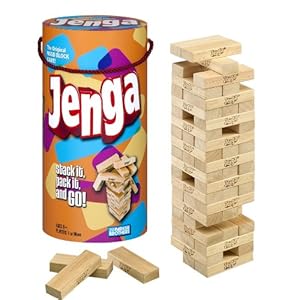
Ms. B and I had to do some shifting of days and time for group this week, but we conducted our session in the boys' classroom while they ate lunch. Since we knew we'd have limited time and they'd have limited attention due to the tasty school sustenance, we decided to play "Feelings Jenga" and use the opportunity not only to discuss the expression of feelings & emotions, but to practice patience, turn-taking, conversational skills, pro-social interaction, etc. While our Feelings Jenga set is not exactly this one, it's similar.
Everyone in the C's Crew had a chance to remove a Jenga piece from the tower, and if they chose a "feeling" block, read the question aloud for everyone and answer it. Some of the questions in our set were things like, "How do you feel when you make a wise decision?", "Who is your role model and what do you admire about them?", "When you are in a tough situation, how do you deal with it?" and more. We had minimal issues during our first round. We needed to remind the boys to keep their elbows off the table (the tower was unstable after B got a little daring when removing blocks), to use appropriate voice level (they were understandably excited), and to wait their turn. They frequently tried to help whoever's turn it was by yelling out suggestions and pointing (and in the process shaking the table), which led to some frustration if someone didn't take a suggested piece out of the tower. Ms. B suggested they give "silent prompts" instead, and coached the boys in doing thumbs up or down to help guide their classmates towards "safe" Jenga decisions.
The only hiccup in the operation was W. W is a very reactive child, quick to anger and react, but also typically quick to recover. I'm not entirely sure what upset him, but W refused to participate in the latter half of the group session, but instead wandered the room, crawled under tables, and crumpled up papers to throw at the wall. Ms. B is fantastic because she got up at one point without me even noticing and brought him back to group, while I continued to run the game. Of course, as soon as he sat down, W began trying to kick the table, making the Jenga tower wobble in fear. As soon as W was ready to take his turn, the tower fell, which obviously set him off again.
When group ended, we took W for a walk to help him calm down. W told us he was upset that T cussed at him on the way up to class before group (which happened 30 minutes before so I'm not sure why it was being brought up now when he wasn't bothered by it at the time, but hey, I'm not an 11-year old emotionally disturbed child). We talked about what he could do "next time" and encouraged him to tell us and talk about what's bothering him, especially during group, so that we could talk about it and use it as a teachable moment. He went back into class with little trouble, and had no problems for the rest of the day.
So, all in all, a successful group session today! Of course, literally as soon as Ms. B and I left C's Crew, we had to manage a crisis as we passed by a student having a minor seizure outside the cafeteria. My job? Never boring.
Everyone in the C's Crew had a chance to remove a Jenga piece from the tower, and if they chose a "feeling" block, read the question aloud for everyone and answer it. Some of the questions in our set were things like, "How do you feel when you make a wise decision?", "Who is your role model and what do you admire about them?", "When you are in a tough situation, how do you deal with it?" and more. We had minimal issues during our first round. We needed to remind the boys to keep their elbows off the table (the tower was unstable after B got a little daring when removing blocks), to use appropriate voice level (they were understandably excited), and to wait their turn. They frequently tried to help whoever's turn it was by yelling out suggestions and pointing (and in the process shaking the table), which led to some frustration if someone didn't take a suggested piece out of the tower. Ms. B suggested they give "silent prompts" instead, and coached the boys in doing thumbs up or down to help guide their classmates towards "safe" Jenga decisions.
The only hiccup in the operation was W. W is a very reactive child, quick to anger and react, but also typically quick to recover. I'm not entirely sure what upset him, but W refused to participate in the latter half of the group session, but instead wandered the room, crawled under tables, and crumpled up papers to throw at the wall. Ms. B is fantastic because she got up at one point without me even noticing and brought him back to group, while I continued to run the game. Of course, as soon as he sat down, W began trying to kick the table, making the Jenga tower wobble in fear. As soon as W was ready to take his turn, the tower fell, which obviously set him off again.
When group ended, we took W for a walk to help him calm down. W told us he was upset that T cussed at him on the way up to class before group (which happened 30 minutes before so I'm not sure why it was being brought up now when he wasn't bothered by it at the time, but hey, I'm not an 11-year old emotionally disturbed child). We talked about what he could do "next time" and encouraged him to tell us and talk about what's bothering him, especially during group, so that we could talk about it and use it as a teachable moment. He went back into class with little trouble, and had no problems for the rest of the day.
So, all in all, a successful group session today! Of course, literally as soon as Ms. B and I left C's Crew, we had to manage a crisis as we passed by a student having a minor seizure outside the cafeteria. My job? Never boring.
Thursday, April 28, 2011
Team-Building: 11-Year Old Boys + Marshmallows = Sticky Awesome!
We had our first group session today with the class of 6:1+1 boys who have dubbed themselves "C's Crew" after their teacher (precious). Ms. B, my co-leader, began the group by having the students choose their group name and go over some ground rules. Then, we got down to our activity, something we'll be doing a lot of. The boys are very active, so we're planning less talking and teaching and more activities and hands-on learning. We're going to start with social skills and team-building activities, and move on to things that will be targeting anger management and effective conflict resolution.
Today, I ran our activity. I broke the students into two groups based on when their birthday in the year (we're going to do many groupings to make sure that everyone gets to work together) and filled the boys in on The Spaghetti Tower. To anyone who has done this ice-breaker, you know that it can go well or horribly awry. The purpose of the boys doing the activity today was to discuss, plan, and implement their collective ideas to make the tallest spaghetti/marshmallow tower they could. They had to work together as a team and consider their peers ideas in order to succeed. This is no easy feat for six 11-year old boys with impulsivity and less than stellar social skills.
The boys did well working together. B and T's team definitely had the upper-hand, as they are two of the higher functioning kids in the class socially, so they were able to bounce ideas back and forth and delegate tasks well. Their tower was the tallest. A was in their group, a boy who needs the most social skill work as he has symptoms of Asperger's Disorder. He was unable to contribute to the group tower without a lot of coaching and prompting from Mrs. C, their teacher. V and W's tower was the sturdiest, and also the stickiest! They worked with Ms. B on turn-taking, sharing, and clear communication. G was absent today, so we'll get him in the mix next week!
When the activity was done and the boys mouths were stuffed with marshmallow-y goodness, we did a bit of processing of the session. The boys talked about what made the activity work, and while Ms. B and I had to do some prying, we got "teamwork," "being nice," and "talking" out of them. We also gave our feedback and told the boys specific things we observed that helped the activity, and complimented them. We didn't get to chat as much as we would've liked since the dismissal announcements interrupted us, unfortunately. But all in all, a very enjoyable first session!
To the poor maintenance worker who had to clean the sticky and oozy mess left behind after 3:35pm... perhaps I can repay you with the leftover marshmallows?
Today, I ran our activity. I broke the students into two groups based on when their birthday in the year (we're going to do many groupings to make sure that everyone gets to work together) and filled the boys in on The Spaghetti Tower. To anyone who has done this ice-breaker, you know that it can go well or horribly awry. The purpose of the boys doing the activity today was to discuss, plan, and implement their collective ideas to make the tallest spaghetti/marshmallow tower they could. They had to work together as a team and consider their peers ideas in order to succeed. This is no easy feat for six 11-year old boys with impulsivity and less than stellar social skills.
![]() |
| If only their towers were so neat. |
The boys did well working together. B and T's team definitely had the upper-hand, as they are two of the higher functioning kids in the class socially, so they were able to bounce ideas back and forth and delegate tasks well. Their tower was the tallest. A was in their group, a boy who needs the most social skill work as he has symptoms of Asperger's Disorder. He was unable to contribute to the group tower without a lot of coaching and prompting from Mrs. C, their teacher. V and W's tower was the sturdiest, and also the stickiest! They worked with Ms. B on turn-taking, sharing, and clear communication. G was absent today, so we'll get him in the mix next week!
When the activity was done and the boys mouths were stuffed with marshmallow-y goodness, we did a bit of processing of the session. The boys talked about what made the activity work, and while Ms. B and I had to do some prying, we got "teamwork," "being nice," and "talking" out of them. We also gave our feedback and told the boys specific things we observed that helped the activity, and complimented them. We didn't get to chat as much as we would've liked since the dismissal announcements interrupted us, unfortunately. But all in all, a very enjoyable first session!
To the poor maintenance worker who had to clean the sticky and oozy mess left behind after 3:35pm... perhaps I can repay you with the leftover marshmallows?
Shiny New Group Intervention!
I'm starting up a weekly group in my "favorite" 6:1+1 classroom with one of my colleagues, who is a counselor from an outside mental health agency. This is the class that that my buddies T and B are in, so I'm quite excited. We're going to be focusing on appropriate social skills to increase self-esteem and promote effective conflict resolution and anger management. We plan on collecting pre- and post-group information from their teacher, to see how well the students are using the skills taught in group within the classroom.
I thought it would be useful to outline the goals and activities in our sessions, in case other folks out in cyberland may want to replicate them in their own settings. It'll also be a good "processing" after the group, to collect my thoughts on how things went and what could be improved.
Take that and recap it back!
- Session 1: Team-Building: 11-Year Old Boys + Marshmallows = Sticky Awesome!
- Session 2: Feelings Jenga: An Excellent Opportunity For a Snit Fit
- Session 3: Self-Esteem: Spongebob, Cats, and Money, oh my!
- Session 4: "A" is for "Adorable," "N" is for "Neighborly," "S" is for "SA-WEEEET"
- Session 5: Anger Management: Indian Giver
- Session 6: When Outside Play Time Goes Awry
- Session 7: Peanut Butter, Jelly, and Dollop?!
- Session 8: Ice Cream Sandwich-y Goodbyes
Tuesday, March 15, 2011
I Believe You Have My Stapler
J is a student who has had some behavioral difficulties this year. J's home life is pretty tough and a lot of those troubles come to school with him. He also, like many pre-teen boys, has some hygiene issues, which are exacerbated by problems at home. He isn't well-liked by his peers or teacher, sadly.
In J's case, an inch of attention and positive reinforcement goes a mile. J has been coming to visit my office for about a week now at the end of the day for good behavior. Normally, I'll play games with kids or let them color to reward a good day. But J isn't all that interested in games. Instead, he wants to run errands and help out around the office.
So far, he's stuffed envelopes, put folders together, organized contact logs and put telephone number cards in alphabetical order, stapled packets, and delivered papers to teachers. And J has done it with such excitement and happiness! Who knew that a child would find such enjoyment in doing tasks that waste so much of my day! (although I have to admit, I would've delighted in getting to help someone at school in their office as a kid. Still a nerd.)
But the real plus side is that J is getting the positive adult attention he needs. So many of the kids in my building need just a little TLC from someone to let them know that they matter. The fact that J will behave all day long just to come down and do 15 minutes of office work amazes and saddens me. I'll kill 80 trees and make purposeful messes if it means that J can have fun putting it all back together again.
In J's case, an inch of attention and positive reinforcement goes a mile. J has been coming to visit my office for about a week now at the end of the day for good behavior. Normally, I'll play games with kids or let them color to reward a good day. But J isn't all that interested in games. Instead, he wants to run errands and help out around the office.
So far, he's stuffed envelopes, put folders together, organized contact logs and put telephone number cards in alphabetical order, stapled packets, and delivered papers to teachers. And J has done it with such excitement and happiness! Who knew that a child would find such enjoyment in doing tasks that waste so much of my day! (although I have to admit, I would've delighted in getting to help someone at school in their office as a kid. Still a nerd.)
But the real plus side is that J is getting the positive adult attention he needs. So many of the kids in my building need just a little TLC from someone to let them know that they matter. The fact that J will behave all day long just to come down and do 15 minutes of office work amazes and saddens me. I'll kill 80 trees and make purposeful messes if it means that J can have fun putting it all back together again.
Labels:
behavior,
case studies,
interventions,
warm fuzzies
Subscribe to:
Posts (Atom)